After a serious truck accident, the clock starts ticking on your recovery and on the evidence needed to prove your case. Unlike a standard car wreck, the most important evidence in a commercial truck accident is owned by the very company you will likely have to pursue for compensation.
This is where a truck accident lawyer’s role becomes immediately clear. We use specific legal tools to stop the clock on evidence destruction. The primary tool is a Spoliation Letter, which creates a binding legal obligation for the trucking company to preserve everything.
If you are home recovering and worried that the proof needed for your claim is vanishing, you are right to be concerned. Call us at (512) 477-7333 to ensure your case is built on a solid foundation of facts, not just memories.
Key Takeaways for Preserving Truck Accident Evidence
- A spoliation letter creates a legal duty to preserve evidence. This formal notice legally requires a trucking company to save everything from black box data to driver logs, preventing them from destroying proof needed for your claim.
- Critical digital evidence is deleted quickly. Onboard camera footage and other data are typically automatically overwritten in weeks or even days, making immediate legal action essential.
- Court orders force compliance if a company resists. If a spoliation letter is ignored, we seek a Temporary Restraining Order (TRO) to legally prohibit the company from altering the truck or its data.
Why Truck Accident Evidence Is Volatile
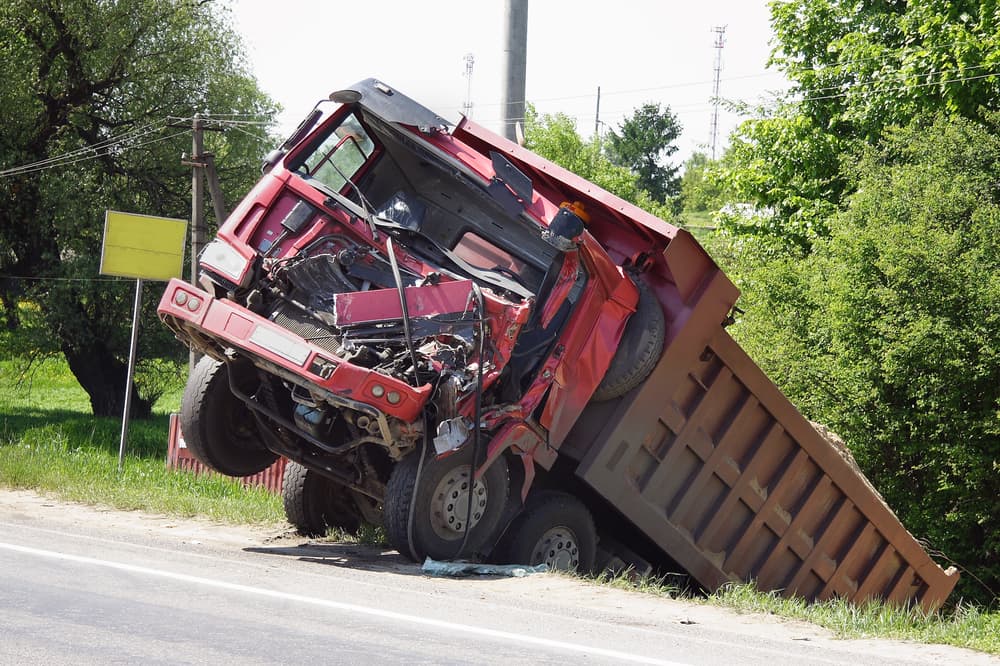
Evidence from a commercial truck accident has a remarkably short shelf life. Trucking companies are businesses, and their goal is to keep their fleet moving. That means damaged trucks are quickly sent for repair, onboard camera footage is recorded over, and electronic data is cleared to free up storage space. Their business model depends on getting assets back on the road, not preserving them as part of an investigation.
This creates a significant imbalance. While you are at home focused on healing, their internal response team is already at work. If that truck is repaired or its data is overwritten before your side inspects it, the objective proof of what happened is gone for good. The story then becomes the driver’s word against yours, which is a position no victim wants to be in.
The First Line of Defense: The Spoliation Letter
So, how does your lawyer preserve evidence for a truck accident claim when it is controlled by the other side? We start with the aforementioned Spoliation Letter. In simple terms, this is a formal legal notice, sent via certified mail, to the trucking company, their driver, and their insurance carrier. It puts them on notice, officially informing them of a pending claim and creating a legal duty to preserve all related evidence.
The letter explicitly says, "We know you have this evidence, and you are now legally required to keep it." In Texas, if a company destroys evidence after receiving a spoliation notice, it faces sanctions from the court. This is based on a legal concept known as spoliation of evidence.
What Happens If They Ignore the Letter?
If the company fails to preserve the evidence after being put on notice, we ask the judge for what is called an adverse inference instruction. The court tells the jury to assume that the evidence the company destroyed would have been unfavorable to them. If they deleted the driver's logbooks, the jury may be instructed to presume the driver was violating federal hours-of-service rules.
We send this letter immediately, sometimes within days of taking on a case, because we know the digital clock is ticking. The letter includes a detailed checklist of everything the company must save, including:
- Electronic Control Module (ECM) data
- Electronic Logging Device (ELD) records
- Dashcam and driver-facing camera footage
- The driver’s complete employment and qualification file
- All post-crash drug and alcohol test results
- Inspection and maintenance records for the truck and trailer
- Dispatch instructions and trip envelopes
The Black Box (ECM) and Electronic Data

Modern semi-trucks are rolling computers, packed with systems that record immense amounts of data. This information provides an objective, second-by-second account of the truck's actions leading up to a collision, cutting through conflicting stories.
ECM (Electronic Control Module)
Also called the truck’s black box, the Electronic Control Module (ECM) is the engine's brain. It monitors and records essential operational data. When an accident occurs, this data proves what really happened. The ECM captures:
- Vehicle Speed: It shows how fast the truck was moving at and just before impact.
- Brake Application: The data reveals if and when the driver applied the service brakes.
- Throttle Position and RPMs: This tells us whether the driver was accelerating.
- Cruise Control Usage: It shows if cruise control was engaged at the time of the crash.
ELD (Electronic Logging Device)
Federal law strictly limits the number of hours a commercial driver is on the road to prevent fatigue-related accidents. These regulations are known as Hours of Service (HOS) rules. ELDs are devices that automatically track a driver's HOS compliance. They show when the driver was on-duty, off-duty, and driving.
Timing is essential. The Federal Motor Carrier Safety Administration (FMCSA) only requires trucking companies to keep ELD data for six months. After that, it can legally be destroyed. Our spoliation letter demands they preserve this data long before that deadline arrives, protecting crucial evidence of potential driver fatigue.
Onboard Cameras
Many commercial trucks are now equipped with forward-facing dashcams and, increasingly, driver-facing cameras. The forward-facing camera provides a clear view of the road, while the driver-facing camera captures acts of distracted driving, such as texting, eating, or falling asleep at the wheel.
The problem is that these systems are typically set up on a loop, recording over old footage every 14 to 30 days. Without a legal demand to preserve a specific clip, the video evidence of the crash could be overwritten while you are still in the hospital.
Looking Beyond the Truck: Corporate Records
A truck accident is not always just the driver's fault. Sometimes, the trucking company’s own policies and procedures are what led to the crash. That is why your lawyer works to preserve evidence that shines a light on the company's conduct.
Hiring and Qualification Files
We demand the driver's complete personnel file to answer questions such as: was the driver properly qualified to operate a commercial vehicle? Did they have a valid Commercial Driver’s License (CDL)? We look for red flags the company might have ignored during the hiring process, such as a history of reckless driving, DUIs, or prior accidents.
Maintenance Logs
Was the truck even roadworthy? We analyze the truck's maintenance history to see if the company was cutting corners on safety. We look for patterns of deferred maintenance, which is a business term for skipping or delaying needed repairs on things like brakes or tires to save money. If faulty equipment contributed to the crash, the company could be held responsible.
Training Manuals
Did the company provide its drivers with adequate safety training, or did they just hand over the keys? Company training manuals and safety policies reveal a corporate culture that prioritizes speed and profits over public safety. Preserving these documents helps us hold the company accountable for its role in the collision, which frequently provides access to larger corporate insurance policies than a claim against the driver alone.
The Chain of Custody: Keeping Evidence Admissible
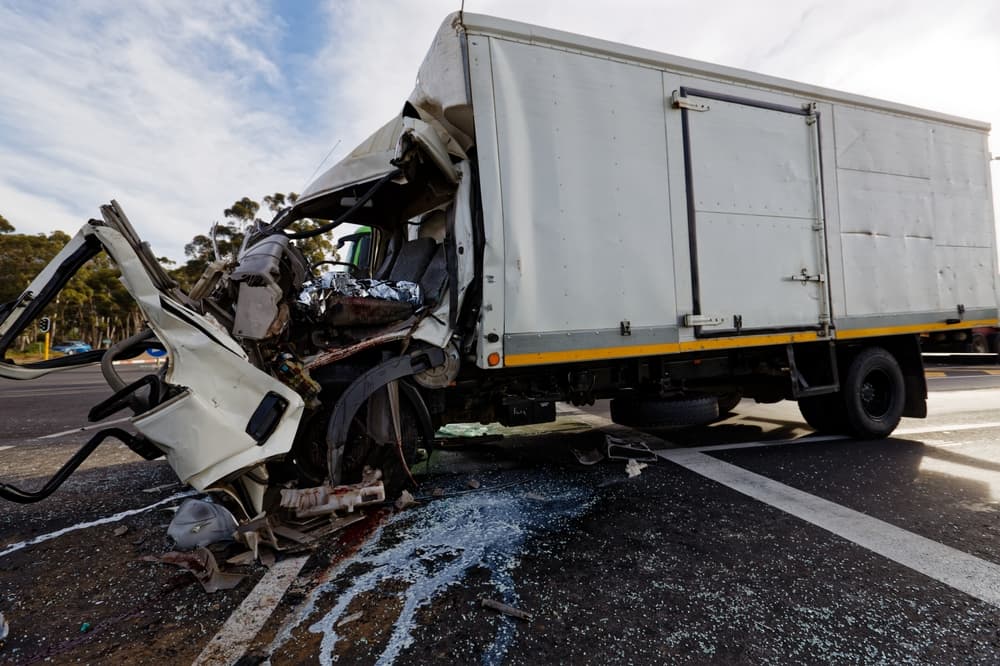
Finding the evidence is only half the battle. We also have to prove in court that it is the same evidence from the accident and that it has not been altered or tampered with. This is a legal concept known as the chain of custody.
To maintain a proper chain of custody, we meticulously document the entire evidence collection process. This includes tracking who handled the evidence, when they handled it, and where it was stored. We work to ensure that physical evidence, like a truck’s damaged tire or the ECM itself, is kept in a secure, climate-controlled facility, not left to degrade in a tow yard where parts may disappear or be damaged by the elements.
If the chain of custody is broken, the trucking company’s lawyers will argue that the evidence is unreliable and cannot be trusted. A judge might agree and throw it out, leaving a hole in your case. We have experience in these procedures to ensure that every piece of proof we gather is admissible in court.
Escalating: Temporary Restraining Orders (TROs)
What happens if the trucking company refuses to cooperate, or if we have reason to believe they are actively ignoring our spoliation letter? In these situations, we escalate the matter by going directly to a judge.
We will file for a Temporary Restraining Order (TRO), which is an emergency court order that legally prohibits the trucking company from touching, repairing, or disposing of the truck or its data. A TRO is a command from a judge, and violating it leads to severe legal penalties.
For example, a judge issues a TRO that orders the wrecked tractor-trailer to be left untouched at a tow yard until our designated accident reconstruction team can fly in. This allows our team to personally download the black box data, photograph the vehicle damage, and measure crush depths without interference.
How This Preserved Evidence Wins Cases
The reason we go to such lengths to preserve every piece of evidence is because these details, when woven together, tell the true story of the accident. This objective proof systematically dismantles the trucking company’s defenses and builds a powerful foundation for your claim.
- Example 1: The truck driver claims you suddenly cut him off. But the preserved ECM data shows he was driving 15 mph over the speed limit and never touched his brakes until the moment of impact. The data proves his negligence, not yours.
- Example 2: The trucking company insists its driver was well-rested and followed all regulations. The ELD data, combined with fuel receipts and dispatch logs we also preserved, shows he had been on the road for 16 consecutive hours, a clear violation of federal safety rules.
When we present the insurance carrier with this kind of undeniable, fact-based evidence, their position weakens considerably. They understand that a jury is unlikely to side with them when faced with objective data that contradicts their driver's story. This creates significant leverage for a fair settlement offer without the need for a prolonged court battle.
Frequently Asked Questions About Truck Accident Evidence
Can I preserve the evidence myself?
Unfortunately, no. As an individual, you do not have the legal authority to demand access to a commercial truck or to compel a company to turn over its internal records. This requires formal legal action initiated by a lawyer.
How long does the trucking company keep dashcam footage?
It varies, but many systems are designed to automatically overwrite footage in as little as 7 to 14 days. This is one of the most time-sensitive pieces of evidence, making a prompt legal hold indispensable.
What if they already repaired the truck?
Even if the truck has been repaired, not all is lost. We can still demand and analyze repair invoices, parts orders, work orders, and photographs taken by the company's insurer or investigators immediately after the crash.
Do I need a lawyer if the police report says the truck driver was at fault?
Yes. A police report is an officer’s summary and opinion, not a legal verdict. The trucking company and its insurer will still work to challenge the value of your claim, and the police report does not contain the essential digital data from the ECM and other onboard systems needed to fully prove negligence.
What is the cost to start this preservation process?
At our firm, there are no upfront costs to you. We handle the expenses associated with the investigation and evidence preservation. You only pay a fee if we are successful in recovering compensation for you.
Protect Your Claim Before Critical Evidence Disappears

The trucking company’s response team was likely on the scene before the dust had even settled. You need someone in your corner working just as quickly to protect your interests.
At Lorenz & Lorenz, PLLC, our practice is focused on handling these difficult cases. We know precisely what evidence is needed and how to legally stop it from being deleted or destroyed.Call us today at (512) 477-7333.