Cycling in Killeen means sharing the road with vehicles far heavier than your bicycle. One distracted moment behind the wheel can change your life.
Most bicycle accident claims in Killeen, Texas, come down to a single question: who broke the rules of the road. Proving that starts with knowing what those rules actually say.
Key Takeaways:
- Texas law treats bicycles as vehicles, so cyclists have the same rights and duties as drivers on most roads.
- Cyclists are generally expected to ride near the right side of the roadway, though there are real exceptions worth knowing.
- Texas requires drivers to maintain a "safe distance," but there is no statewide rule specifying an exact distance.
- Failure to yield at intersections is one of the most common reasons a driver and a cyclist collide.
What Bicycle Safety Laws Apply to Cyclists in Killeen?
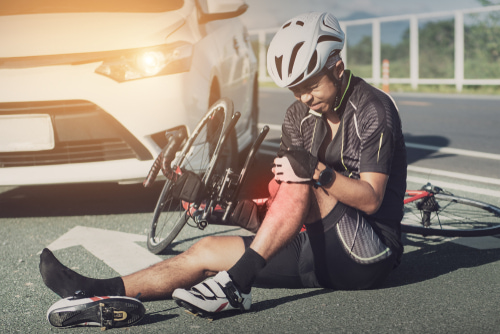
The cyclist rights Killeen riders can count on start with one idea: Texas law does not treat a bicycle differently from other vehicles. The same rules of the road that protect drivers protect the person cycling next to them.
Under Texas Transportation Code Section 551.101, someone riding a bicycle generally has the same rights as someone driving a car. In practice, that cuts both ways. For example, a cyclist has to stop at red lights just like a driver would, but a driver also owes that cyclist the same right-of-way they would owe another vehicle.
Where Cyclists Must Ride on the Roadway
A cyclist moving slower than surrounding traffic rides as near as practicable to the right curb or edge, under Texas Transportation Code Section 551.103. A rider keeping pace with traffic is not bound by that rule.
The statute builds in exceptions for passing another vehicle, preparing to turn left, and avoiding a hazard that makes hugging the curb unsafe. Section 551.103(c) also permits riding two abreast, and on a laned roadway, the pair stays in a single lane.
Hand Signals for Turning and Stopping
Many bicycle accidents in Killeen involve a driver failing to yield, and signaling is often what the two sides argue about afterward. Texas Transportation Code Section 545.104 requires a continuous signal for at least the last 100 feet before a turn, and Section 545.107 sets out the accepted hand and arm positions.
A clear signal gives a driver behind or beside you a real chance to react. Where no signal was given, expect failure to signal to become part of the fault analysis.
Required Equipment: Lights and Brakes
Every bicycle on the road needs a brake that can actually make the wheel skid on dry, clean pavement. If you are riding after dark, defined in Texas as 30 minutes after sunset to 30 minutes before sunrise, the law also requires a white front light visible from at least 500 feet. In addition, nighttime riding requires a red reflector visible 50 to 300 feet when directly in front of a car's high beams, or a red rear lamp emitting light visible from 500 feet.
Safe Passing Distance: What Texas Law Actually Requires
Texas Transportation Code Section 545.053 requires a passing driver to clear the vehicle being overtaken at a safe distance. However, what counts as safe majorly depends on the situation.
A commercial truck passing a cyclist at highway speed needs far more clearance than a sedan passing at 30 mph, and Texas law leaves that judgment to the facts of the case.
It also helps to know that cyclists are legally allowed to move left within the lane to avoid hazards such as potholes. Drivers need to anticipate that a cyclist might shift position for a good reason and give them room accordingly, rather than passing too close to the shoulder and assuming the cyclist will hold a perfectly straight line.
How Do Bicycle Accidents Fit Into Personal Injury Law?

The same way any injury claim does: you show that someone failed to use reasonable care, which is negligence, that the failure makes them legally responsible, which is liability, and what the harm costs you. One collision can involve more than one careless party and more than one policy.
Bicycle accidents are one of several personal injury claim types we handle in Killeen. Evaluating these claims often requires reviewing the specific circumstances surrounding the collision. Important evidence may include:
- Police reports.
- Photographs of the scene.
- Bicycle and vehicle damage.
- Surveillance footage.
- Witness statements.
- Medical records.
- Cell phone or dash camera evidence, when available.
Preserving this early helps establish liability and document your damages.
FAQs: Bicycle Accident Claims Killeen, Texas
Here are answers to several questions cyclists commonly ask after an accident.
Can I still file a claim if I was not riding in a designated bike lane?
You can file a claim even if you are not riding in a designated lane. Texas law does not require cyclists to exclusively use designated bicycle lanes when they are available. Whether a rider was using a bike lane is only one of many factors considered when determining liability, and many valid claims arise on roads without dedicated cycling infrastructure.
Are electric bicycles covered by the same laws as regular bicycles?
Most rules for traditional bicycles also apply to electric bicycles, with extra requirements depending on the bike's class. Texas classifies electric bicycles by motor wattage and the speed at which motor assistance cuts off, and that cutoff is not the same for every class. Confirm your bike's class before assuming the standard bicycle rules cover it.
Does insurance typically cover a bicycle accident claim?
Insurance coverage depends on how the accident occurred and the types of insurance policies available. Texas operates as a "fault-based" insurance state, and the insurance company of the person who caused the crash is responsible for the damages. In some cases, health insurance or uninsured/underinsured motorist coverage may also apply if the driver lacks adequate coverage or cannot be identified.
Talk to a Killeen Bicycle Accident Lawyer Today

Fault after a bicycle accident is rarely as simple as the first account suggests. A Killeen bicycle accident lawyer can help protect your claim and document what happened while the evidence is still there.
A Killeen claim that does not settle is filed in Bell County, at the courthouse in Belton. Call Lorenz & Lorenz at (512) 477-7333 to talk through your collision.