There is a reason many Georgetown drivers become cautious when they find themselves surrounded by tractor-trailers on Interstate 35. Commercial trucks travel through the city at all hours, carrying freight between Austin, Dallas, and destinations across Texas. Most trips end safely, but the size and weight of these vehicles mean a truck accident in Georgetown, Texas, can leave life-changing injuries behind.
Understanding what causes these collisions goes beyond simple curiosity. The events leading up to a crash frequently determine who may be legally responsible, what evidence becomes important, and how an injury claim develops. Many Georgetown truck crashes involve more than one factor, making careful investigation an important part of the claims process.
Key Takeaways:
- Driver fatigue, distracted driving, and speeding remain among the leading causes of commercial truck collisions.
- Mechanical failures and improperly loaded cargo can contribute to preventable crashes.
- Heavy truck traffic along Interstate 35 increases the risk of serious collisions in Georgetown.
- Identifying the cause of a truck accident is an important step in determining liability.
- Commercial truck crashes often involve multiple potentially responsible parties.
What Causes Most Truck Accidents in Georgetown, Texas?
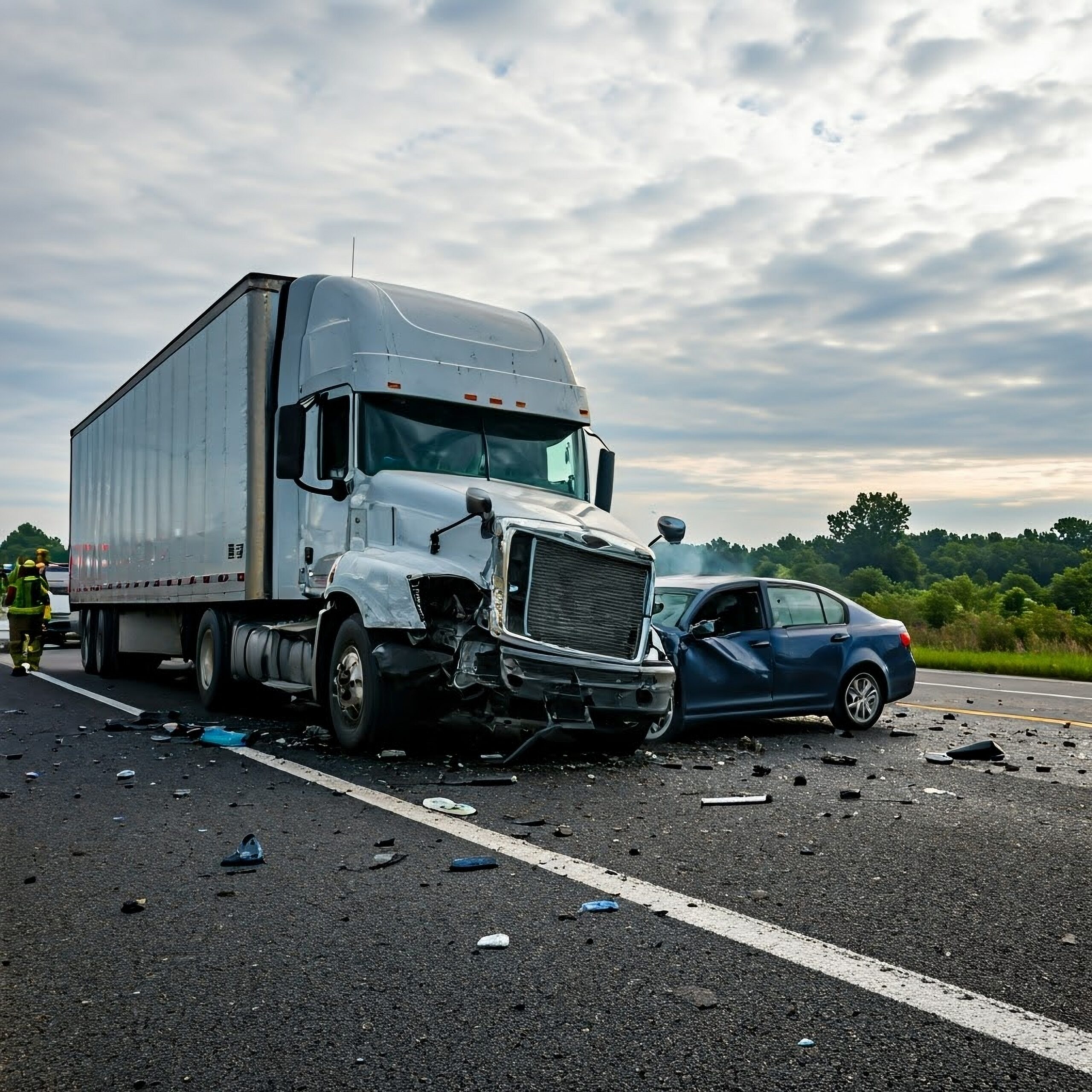
Most Georgetown truck accident causes come down to a combination of driver decisions, vehicle condition, road conditions, and company practices. Every collision is different, but investigators keep finding the same recurring factors.
Driver Fatigue
Long hours behind the wheel remain one of the leading causes of commercial truck collisions. Federal hours-of-service rules cap driving at 11 hours after 10 consecutive hours off duty, codified at 49 C.F.R. Section 395.3. Fatigue still develops when a driver gets poor rest or runs a demanding delivery schedule.
Fatigue slows reaction time, affects decision-making, and reduces a driver's ability to recognize hazards quickly. Even a brief lapse in attention can become dangerous when operating a fully loaded commercial truck weighing tens of thousands of pounds.
Distracted Driving
Commercial truck drivers spend long periods on the road, increasing opportunities for distraction. Looking at a phone, adjusting navigation equipment, eating, or communicating with dispatch may divert attention from surrounding traffic.
Unlike passenger vehicles, large trucks require considerably more time and distance to stop. A distraction lasting only a few seconds may prevent a driver from avoiding slower traffic or an unexpected obstacle.
Speeding and Driving Too Fast for Conditions
Speed contributes to many serious truck accidents, even when a driver is traveling within the posted speed limit. Heavy rain, traffic congestion, construction zones, and reduced visibility all require commercial drivers to adjust their speed.
Large trucks carry significant momentum, making sudden stops much more difficult than they are for smaller vehicles. Higher speeds also increase both the stopping distance and the force of impact during a collision.
Unsafe Lane Changes
Commercial trucks have extensive blind spots around both sides of the trailer, directly behind the truck, and immediately in front of the cab. Drivers who fail to carefully check these areas before changing lanes may collide with vehicles traveling alongside them. These crashes frequently occur on busy stretches of Interstate 35, where heavy traffic and frequent merging leave little room for error.
Improperly Loaded Cargo
Not every truck accident begins with driver error. Cargo that shifts during transportation can affect steering, braking, and stability, raising the risk of a rollover or a jackknife, where the trailer swings out at an angle to the cab.
Improper loading, unsecured freight, and overloaded trailers may all become contributing factors. In these situations, investigators may examine cargo securement rules and whether another company responsible for loading the trailer shares responsibility for the crash.
Mechanical Problems and Poor Maintenance
Commercial trucks accumulate thousands of miles each month, making routine maintenance essential for safe operation. Brake failures, tire blowouts, steering problems, defective lights, and suspension failures can all contribute to preventable collisions. Maintenance records frequently become important evidence when determining whether a trucking company properly inspected and serviced its fleet before placing vehicles on the road.
Truck accidents are one of several personal injury claim types we handle in Georgetown. Identifying every contributing factor helps build a clearer picture of how the crash occurred and who may ultimately be responsible. Depending on the evidence, liability may extend beyond the truck driver to include a trucking company, maintenance contractor, cargo loading company, or vehicle manufacturer.
In addition, truck accidents often cause more severe injuries than typical car accidents in Georgetown. That difference shows up in the claim itself, since catastrophic injury cases carry higher medical costs, longer treatment, and larger disputes over future care.
FAQs: Truck Accidents Georgetown, Texas
Here are answers to the questions Georgetown drivers ask most often after a commercial truck collision.
Why do truck accident investigations usually take longer than car accident investigations?
Truck accident investigations often involve significantly more evidence than ordinary passenger vehicle crashes. Investigators may examine electronic logging devices, maintenance records, inspection reports, cargo documents, and federal safety regulations before determining how the collision occurred. Reviewing these additional records frequently extends the investigation.
What evidence is unique to a truck accident claim?
Truck accident claims frequently involve electronic logging device data, driver qualification files, maintenance records, inspection reports, cargo manifests, and company safety records. These documents can provide valuable information about driver fatigue, vehicle condition, and regulatory compliance. They often play an important role in determining liability.
How soon should evidence be preserved after a truck accident?
Evidence should be preserved as early as possible after a collision whenever practical. Some trucking records, electronic data, and surveillance footage may only be retained for a limited period before they are overwritten or destroyed. Acting promptly can make it easier to preserve information that may later become important to a claim.
Talk With Lorenz & Lorenz, PLLC About Your Truck Accident

What caused a Georgetown truck crash usually decides who is legally responsible for it. If you have been injured in a commercial truck collision, a Georgetown truck accident lawyer can help you build your claim.
A Georgetown case file in Williamson County, where the district courts sit at the courthouse here in town. Call Lorenz & Lorenz at (512) 477-7333 to talk through what happened.