Believing you may share some blame for your car accident does not mean you lose your right to compensation. Questions about comparative fault after a Waco car accident often arise because many drivers assume that any fault on their part disqualifies them entirely.
Most drivers who call our firm after a wreck on I-35 or along Valley Mills Drive make that assumption. That assumption is wrong, and it costs people money every day.
The distinction between partial fault and no recovery is a legal line that Texas draws at a very specific point.
Key Takeaways
- Texas uses a modified comparative negligence system for car accidents in Waco, Texas, which bars recovery unless the claimant's fault exceeds 50%.
- Your compensation is reduced by your assigned percentage of fault in a collision, meaning a driver found 30% at fault for a $100,000 claim would recover $70,000.
- Insurance adjusters actively work to inflate your fault percentage because every point they add reduces the amount their company pays.
- The jury or fact-finder assigns fault percentages to every party involved, including drivers, vehicle owners, employers, and government entities responsible for road conditions.
How Does Texas Modified Comparative Fault Work in a Waco Car Accident?
Texas Civil Practice and Remedies Code § 33.001 establishes the proportionate responsibility framework. Under this rule, a claimant may not recover damages if the claimant's percentage of responsibility exceeds 50%. The rule applies in every personal injury case filed in McLennan County District Court.
Why Does the 51% Threshold Matter So Much in Waco Car Accident Claims?
The 51% bar creates a hard cutoff that insurance companies exploit. An adjuster who can push your fault from 49% to 51% eliminates the entire claim.
In contrast, moving your fault from 20% to 30% reduces the payout by only 10%. The stakes around that threshold explain why adjusters invest so much effort in inflating your share of responsibility.
How Does the Jury Determine Each Driver's Fault Percentage?
Texas Civil Practice and Remedies Code § 33.003 requires the trier of fact to determine the percentage of responsibility for each claimant, defendant, settling person, and responsible third party. The jury considers the nature of each party's conduct and the extent to which that conduct caused the damages at issue.
In practice, the jury weighs physical evidence, witness testimony, expert analysis, and traffic law violations when distributing fault. Our lawyers present each element in a way that clearly ties the other driver's actions to the collision.
What Are Common Shared Fault Scenarios in Waco Car Accidents?
Most shared-fault car accident cases in Waco follow recognizable patterns. The three scenarios below represent the situations our attorneys encounter most frequently in McLennan County.
Can You Still Recover If You Were Following Too Closely in a Rear-End Collision?
Rear-end collisions often carry the assumption that the trailing driver is always at fault. That assumption does not hold up in every case. Texas Transportation Code § 545.062 requires drivers to maintain a safe following distance, but the lead driver also has legal obligations.
If the lead driver made a sudden, unnecessary stop, had non-functioning brake lights, or merged directly in front of you without adequate clearance, that driver shares responsibility.
A jury evaluating a rear-end crash on I-35 near the US-84 interchange, where merging traffic creates abrupt speed changes, would consider the actions of both drivers when assigning fault.
What Happens When a Left-Turn Driver Is Hit by a Speeding Vehicle?
Left-turn crashes often result in shared fault findings. The turning driver is usually presumed at fault for failing to yield under Texas Transportation Code § 545.101, which requires drivers to yield the right-of-way when making a turn.
However, if the approaching vehicle was traveling well above the posted speed limit, the approaching driver shares fault for creating a situation where the turning driver could not accurately judge the closing distance.
Specifically, at intersections along Franklin Avenue and Waco Drive where commercial traffic meets residential turns, speed differentials between vehicles often contribute to these collisions.
A jury in this scenario might assign 60% fault to the turning driver and 40% to the speeding driver. The speeding driver would recover nothing because the 60% assignment exceeds the 51% bar. The turning driver, at 40% fault, would recover 60% of the total damages.
How Is Fault Split in Waco Intersection Accidents Involving Multiple Vehicles?
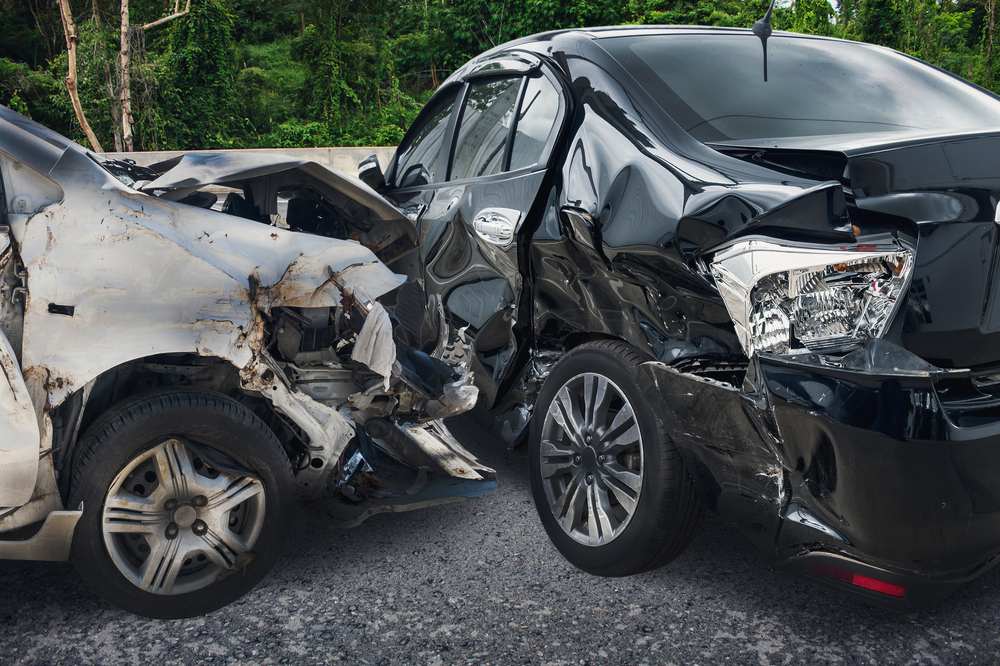
Multi-vehicle intersection crashes add complexity because fault must be distributed across three or more parties. A collision at a signalized intersection where one driver runs a red light, a second driver enters on a stale yellow, and a third driver fails to brake in time creates a three-way fault dispute.
The jury assigns a separate percentage to each party. If your share lands at 25%, you recover 75% of your damages from the other parties whose combined fault equals 75%. Each at-fault defendant pays only the portion corresponding to their individual percentage.
Our attorneys reconstruct multi-vehicle intersection collisions using signal timing data, surveillance footage from nearby businesses, and physical evidence from the scene. In Waco, intersection cameras and business security systems along the Loop 340 commercial corridor often provide footage that resolves conflicting accounts of who entered the intersection first.
How Do Insurance Adjusters Inflate Your Fault After a Waco Car Accident?
Insurance companies assign fault percentages long before a case reaches a courtroom. The adjuster's internal evaluation directly shapes the settlement offer. Every percentage point of fault the adjuster attributes to you reduces the company's financial exposure.
What Tactics Do Adjusters Use to Shift Blame to the Injured Driver?
Adjusters shift blame through recorded statements taken before you have legal representation, selective use of the police report, gaps in your care timeline, and challenges to your prior claims history.
- Recorded statements taken before you have legal representation: Adjusters contact you within days of the crash and ask leading questions designed to produce answers that suggest fault. A question like "Did you see the other car before the impact?" implies you should have avoided the collision.
- Selective use of the police report: Officers record their observations at the scene. However, the report does not determine civil fault. Insurance adjusters often highlight selective portions that support their position while downplaying facts that help your claim.
- Gaps in medical treatment: If you delayed seeking care or missed appointments, the adjuster argues your damages are overstated and that you failed to mitigate your losses. Both arguments increase your assigned share of fault.
- Pre-existing conditions: The adjuster reviews your medical history for any prior injuries to the same body part and attributes current symptoms to the older condition rather than the crash.
How Do Our Attorneys Counter These Fault-Shifting Tactics?
Our Waco car accident lawyers intervene early and prevent the adjuster from building a fault narrative against you. Specifically, we handle all communication with the insurer from the moment you retain our firm. We obtain the full crash report, not a summary, and identify every detail that supports your claim.
For physical evidence, our team works with accident reconstruction professionals who analyze skid marks, vehicle damage patterns, and point-of-impact data. Their analysis frequently contradicts the adjuster's version of events and reduces or eliminates the percentage of fault assigned to you.
Practical Steps to Protect Your Fault Position After a Waco Car Accident
The actions you take immediately following your crash affect how fault is assigned months later. Many claimants find it helpful to follow these steps:
- Photograph the entire scene from multiple angles before vehicles are moved: Skid marks, debris fields, traffic signals, lane markings, and vehicle positions all help reconstruct how the collision occurred. Once the scene is cleared, this evidence is gone permanently.
- Collect contact information from every witness, including passengers in other vehicles: Witness testimony often contradicts the other driver's account and prevents the adjuster from building an unopposed fault narrative.
- Decline to give a recorded statement to any insurance company before consulting with an attorney: Anything you say in a recorded statement can be used to increase your fault percentage. You have no legal obligation to provide a recorded statement to the other driver's insurer.
- Request a copy of the full police report and review it for accuracy: Officers sometimes record details incorrectly, including vehicle positions, speed estimates, and the sequence of events. If the report contains errors, your attorney can present contradicting evidence early in the process.
Taking these steps early gives our attorneys the evidence needed to challenge an inflated fault assignment.
Comparative Fault Questions Answered by Our Waco Car Accident Attorneys
Can the insurance company decide my fault percentage, or does a jury have to do it?
The insurance company assigns an internal fault percentage during the claims process, but that number is not legally binding. Only a jury or judge can make a final determination of fault at trial. If the insurer's assessment inflates your responsibility, our attorneys can challenge it through negotiation or litigation.
Does a traffic ticket after my Waco car accident prove I was at fault?
A traffic citation is not a determination of civil fault. The ticket reflects the officer's assessment of a traffic violation, not a legal finding of negligence.
However, adjusters use citations as leverage during negotiations. Our attorneys address citations by presenting the full context of the collision, which often shows that the citation does not tell the complete story.
What if the other driver was on their phone, but the police report does not mention it?
Phone use at the time of the crash can be proven through cell phone records and data extraction, regardless of what the police report contains. Our attorneys subpoena these records during litigation and use them to establish that the other driver was distracted, which shifts fault away from you.
What if both drivers ran a red light in a Waco intersection crash?
Both drivers would share fault, and the jury would assign a percentage to each based on the specific circumstances. If Driver A entered the intersection first on a late yellow that turned red, and Driver B entered several seconds into the red phase, Driver B would likely receive a higher fault allocation. Neither driver is automatically barred from recovery unless their individual share exceeds 50%.
Can a passenger in your car be assigned fault in a Waco car accident?
A passenger is rarely assigned fault unless the passenger physically interferes with the driver's ability to operate the vehicle. Grabbing the steering wheel or obstructing the driver's view could result in a fault allocation, but in the vast majority of cases, passengers bear zero responsibility.
Does comparative fault apply differently in Waco truck accident cases?
The same Texas modified comparative fault in Waco rules apply to truck accidents claims, but additional parties may share responsibility. The trucking company, the vehicle maintenance provider, and the cargo loading crew can each receive a separate fault percentage.
Adding these parties often reduces your individual share because the total fault is distributed across more defendants.
How long do you have to file a shared fault car accident claim in Waco?
The statute of limitations for shared fault car accident claims in Texas is two years from the date of the accident. If you do not file within that window, you lose the right to pursue compensation regardless of the other driver's fault percentage.
Fault Is Not Final Until You Say It Is

The fault percentage an insurance adjuster assigns to you is a starting point for negotiation, not the last word. The sooner our attorneys step into your case, the more leverage remains available to challenge the insurer's position.
At Lorenz & Lorenz, PLLC, our attorneys step into your case, take over communication with the insurer, and build the evidence needed to challenge an inflated assignment of fault. We offer consultations at no cost, and our firm provides services in both English and Spanish for McLennan County residents.
If an insurance company is blaming you for a Waco car accident, contact our firm to discuss your situation. There is no obligation or fee unless we secure a settlement for your case.