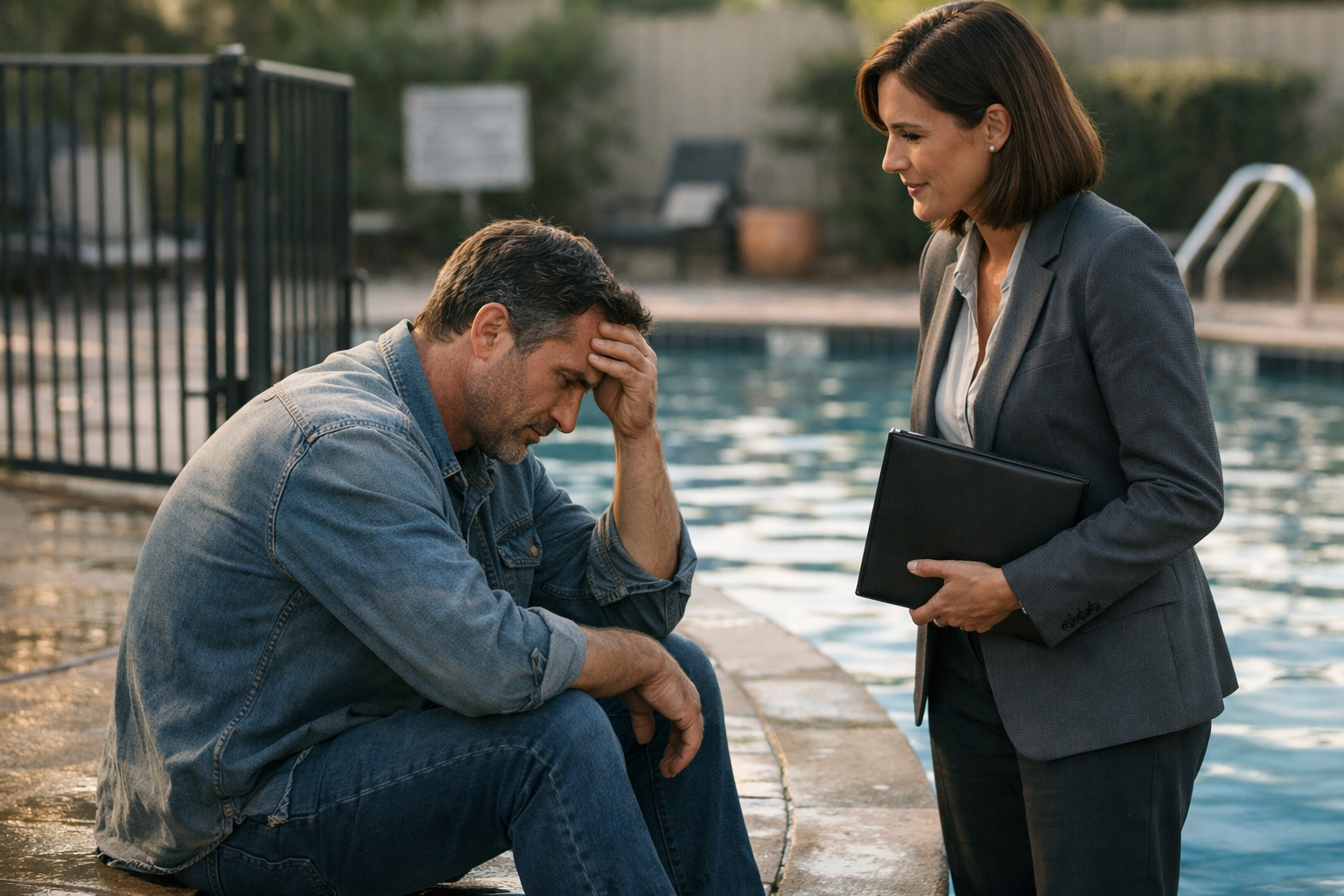
Pool drowning accidents can occur due to preventable hazards such as inadequate supervision, unsecured pool areas, or slippery surfaces. These incidents can result in devastating consequences, including permanent brain injuries, long-term medical complications, or the tragic loss of life.
For survivors and grieving families, the emotional, physical, and financial toll can be overwhelming. When a drowning or near-drowning accident happens due to unsafe conditions, victims and their families may have the right to pursue compensation.
However, negligent property or business owners frequently deny responsibility or resist claims to protect their interests. Our skilled premises liability attorneys at Lorenz & Lorenz can step in to protect your rights.
We can investigate the cause of the accident, gather supporting evidence, and aggressively pursue the compensation you deserve for your losses.
Pool Drowning Accidents Key Takeaways
- Victims can sue property or business owners for pool drowning accidents caused by negligence.
- Proving fault requires evidence such as photographs, maintenance records, and witness testimony.
- Compensation may cover out-of-pocket expenses, medical bills, lost income, loss of consortium, pain and suffering, emotional distress, and more.
- Call a premises liability attorney to understand your legal options.
Can I Sue a Property or Business Owner for a Pool Drowning Accident?
Yes, you can pursue legal action against negligent property or business owners following a pool drowning accident. Filing a lawsuit establishes your legal position, demonstrates the seriousness of your claim, and pressures defendants to offer fair compensation.
Filing a lawsuit is a strategic approach that can strengthen negotiations and increase your chances of securing adequate compensation for your losses.
Here are a few reasons to sue after a pool drowning accident:
Severe Injury or Permanent Disability
You can sue a property or business owner after a pool drowning accident if the incident results in severe injury or permanent disability. Near-drowning events often leave victims with lifelong impairments that require extensive medical care and reduce quality of life.
When these injuries are preventable and tied to negligence, legal action may be appropriate.
Examples of severe injuries that can warrant suing include:
- Traumatic brain injury from oxygen deprivation
- Permanent cognitive impairment or memory loss
- Loss of motor function or paralysis
- Chronic respiratory damage
- Seizure disorders caused by hypoxic injury
- Long-term neurological disabilities require ongoing care
A premises liability attorney can use the lawsuit to demonstrate the severity of your injuries and their long-term impact on your life. They can also fight for a settlement value that covers your current and future losses.
Wrongful Death of a Loved One
When a pool drowning accident results in death, surviving family members may have grounds to pursue a wrongful death lawsuit. Property and business owners have a legal duty to maintain safe pool environments, particularly where children, guests, or paying patrons are present.
A premises liability lawyer can use the lawsuit to seek compensation for funeral expenses, loss of financial support, loss of companionship, and the emotional impact on surviving relatives.
Low Settlement Offers
Many pool drowning claims are met with settlement offers that fail to reflect the true value of the losses involved. Insurers may attempt to resolve claims quickly by offering compensation that does not account for future medical needs, long-term care costs, diminished earning capacity, or non-economic damages.
When settlement offers are unreasonably low, a premises liability lawyer can initiate a lawsuit to pursue fair and just compensation through negotiation or litigation.
Bad Faith Insurer Practices
In some cases, the insurance company's conduct justifies legal action. Insurers are required to handle claims fairly and in good faith. When they fail to do so, litigation may be warranted to protect the injured party's rights.
Examples of bad faith insurer practices that can warrant suing include:
- Unjustified delays in investigating or paying the claim
- Denying valid claims without a proper explanation
- Misrepresenting policy terms or coverage limits
- Refusing to negotiate in good faith
- Pressuring victims or families to accept inadequate settlements
A premises liability lawyer can pursue litigation to enforce fair handling, recover damages, and impose penalties that deter insurer misconduct.
Shared Liability Allegations Raised by Insurers
Insurers often attempt to reduce payouts by alleging shared liability, claiming the victim, a parent, or another party contributed to the drowning accident. These allegations may be exaggerated or unsupported by evidence, particularly in cases involving children or clearly hazardous pool conditions.
When shared liability arguments are used unfairly to limit compensation, a lawsuit allows the facts to be fully examined and responsibility properly allocated.
History of Prior Pool Safety Violations or Complaints
A documented history of safety violations, failed inspections, or prior complaints can strongly support a lawsuit. Repeated issues, such as broken gates, missing safety signage, or malfunctioning drains, indicate that the owner knew or should have known about the dangerous conditions.
Ignoring known risks increases the risk of pool drowning accidents, which are solid grounds to initiate a lawsuit.
Reckless or Grossly Negligent Conduct
Legal action is particularly justified when a pool drowning accident results from reckless or grossly negligent conduct. These cases go beyond simple oversight and involve a conscious disregard for safety.
Examples of reckless conduct by a pool owner that can warrant legal action include:
- Failing to secure pool access despite known risks to children
- Operating a pool without the required lifeguards
- Ignoring mandatory safety codes or inspection requirements
- Allowing broken safety equipment to remain unrepaired
- Continuing pool operations after prior drowning or near-drowning incidents
A premises liability attorney can prove reckless misconduct in court, making a case for additional compensation. A judge can award the victim punitive damages to punish the property or business owner for reckless misconduct.
Proving Fault in a Pool Drowning Accident
When pursuing a premises liability claim after a pool drowning accident, establishing fault requires compelling evidence that demonstrates the property or business owner's negligence. A skilled premises liability attorney can use the following sources of evidence to prove fault:
Photographic and Video Evidence
Visual documentation of the accident scene proves invaluable in demonstrating hazardous conditions. A premises liability attorney can use photographs and videos to show missing or broken safety barriers, inadequate fencing, malfunctioning gates, poor lighting, or obscured warning signs.
For example, they can use video evidence to demonstrate the property's condition at the time of the incident, making it difficult for owners to claim they maintained safe premises.
Maintenance and Inspection Records
Property owners are required to conduct regular pool maintenance and safety inspections. A property liability attorney can subpoena these records to identify gaps in upkeep, missed inspections, or documented problems that went unaddressed.
Missing records can be equally damaging, suggesting the owner failed to perform legally required safety checks.
Witness Testimony
Eyewitnesses who were present during the accident provide crucial accounts of what happened and the conditions that existed. A premises liability attorney may interview former employees, maintenance workers, or frequent visitors who can testify about ongoing safety issues, inadequate supervision, or the owner's knowledge of dangerous conditions that preceded the accident.
Safety Violation Documentation
Municipal building codes, health department regulations, and state pool safety laws establish specific requirements for the operation of pools.
A premises liability lawyer can identify violations of these standards, such as missing drain covers, improper depth markers, the absence of life-saving equipment, or failure to employ required lifeguards.
Expert Analysis
Qualified experts in pool safety, engineering, or drowning prevention can examine the evidence and provide professional opinions on how the accident occurred. A premises liability attorney can use expert opinions to prove that proper safety measures would have prevented the tragedy.
They can also demonstrate that the owner's failure to implement industry-standard precautions directly caused the drowning.
Prior Incident History
Previous accidents, complaints, or near-drownings at the same location can establish a pattern of negligence. A premises liability attorney will investigate whether the property owner had prior knowledge of the dangerous condition and failed to take corrective action, demonstrating a conscious disregard for visitor safety.
Can I Get Compensation for a Pool Drowning Accident
You can initiate a lawsuit or a personal injury claim to obtain compensation for your losses. The compensation provides financial support to cope with or recover from the injury or loss of a loved one. Some of the damages you can recover in a pool drowning claim include:
Medical Expenses
You may incur medical expenses as you attempt to recover from a pool drowning injury. Medical expenses damages comprise a significant share of your compensation claim. The damages cover various costs, including:
- Emergency treatment
- Hospitalization
- Surgeries
- Rehabilitation
- Ongoing care related to injuries sustained in the accident.
In severe cases, compensation may also cover long-term or permanent care needs.
Out-of-Pocket Expenses
Victims often incur numerous out-of-pocket expenses as a result of a pool drowning accident. These may include:
- Prescription medications
- Home modifications for accessibility
- Transportation costs for medical appointments
- Childcare or eldercare expenses
- Medical equipment such as wheelchairs or oxygen tanks
- Special therapies or tutoring for cognitive or physical rehabilitation
Out-of-pocket expenses can add up and cause financial strain, which is why you deserve compensation for these losses.
Lost Income and Loss of Earning Capacity
Injuries from a pool drowning accident may prevent victims from working temporarily or permanently. Compensation can cover lost income during recovery as well as reductions in future earning potential caused by long-term disabilities.
A premises liability attorney can prove these losses using pay stubs, bank statements, profit and loss statements, tax returns, and invoice letters.
Pain and Suffering
Victims can pursue pain and suffering damages for the pain, trauma, discomfort, and limitations caused by the accident. For example, a survivor may experience ongoing nightmares, heightened anxiety around water, and difficulty performing daily activities due to drowning trauma.
Pain and suffering account for both the immediate effects of the accident and long-term consequences.
Emotional Distress
Pool drowning accidents often result in severe emotional trauma for victims and their families. For example, an injured victim may experience post-traumatic stress disorder if the events leading to the accident were traumatic.
Injured victims can pursue compensation for these losses. A premises liability attorney can support the claim using evidence such as:
- Medical or psychological records documenting mental health treatment
- Expert testimony from therapists or counselors
- Journals or personal statements detailing emotional impact
- Testimony from family and friends about changes in behavior or mood
- Documentation of lifestyle changes resulting from the accident
Loss of Companionship or Consortium
Families may seek damages for the loss of companionship, guidance, or support, particularly in cases involving serious injury or wrongful death. For example, if a child drowns in a neighbor's pool, surviving parents may seek compensation for the profound loss of daily care, guidance, and emotional connection with their child.
Speak With Our Premises Liability Attorneys About Your Legal Options
You may endure financial distress if you or a loved one suffers harm in a pool drowning accident. For example, the loss of a loved one can result in funeral and burial costs, as well as the loss of the deceased's financial support.
Our premises liability lawyers at Lorenz & Lorenz have years of experience representing pool drowning victims and their loved ones. You can, therefore, count on us to protect your interests after the accident.
Contact us online for a free case evaluation.
Pool Drowning Accidents Frequently Asked Questions
How Much Does a Premises Liability Lawyer Charge?
Most premises liability lawyers work on a contingency fee basis, meaning they only get paid if you win your case. Their fee comes as a percentage of your settlement or award, so you typically pay nothing up front for their legal representation.
If a Child Drowns in Your Pool, Are You Liable?
Children have strong legal protections as injured victims in pool drowning cases. Property owners owe a duty of care to secure pools with proper fencing, gates, and safety measures.
Even trespassing children may have rights to compensation if the pool posed an "attractive nuisance" without adequate safeguards.
How Much Can I Sue for a Pool Drowning Accident?
The value of compensation you can get depends on injury severity and the availability of evidence documenting negligence. An experienced legal representative can maximize recovery by building compelling arguments and negotiating with insurance companies and defendants.