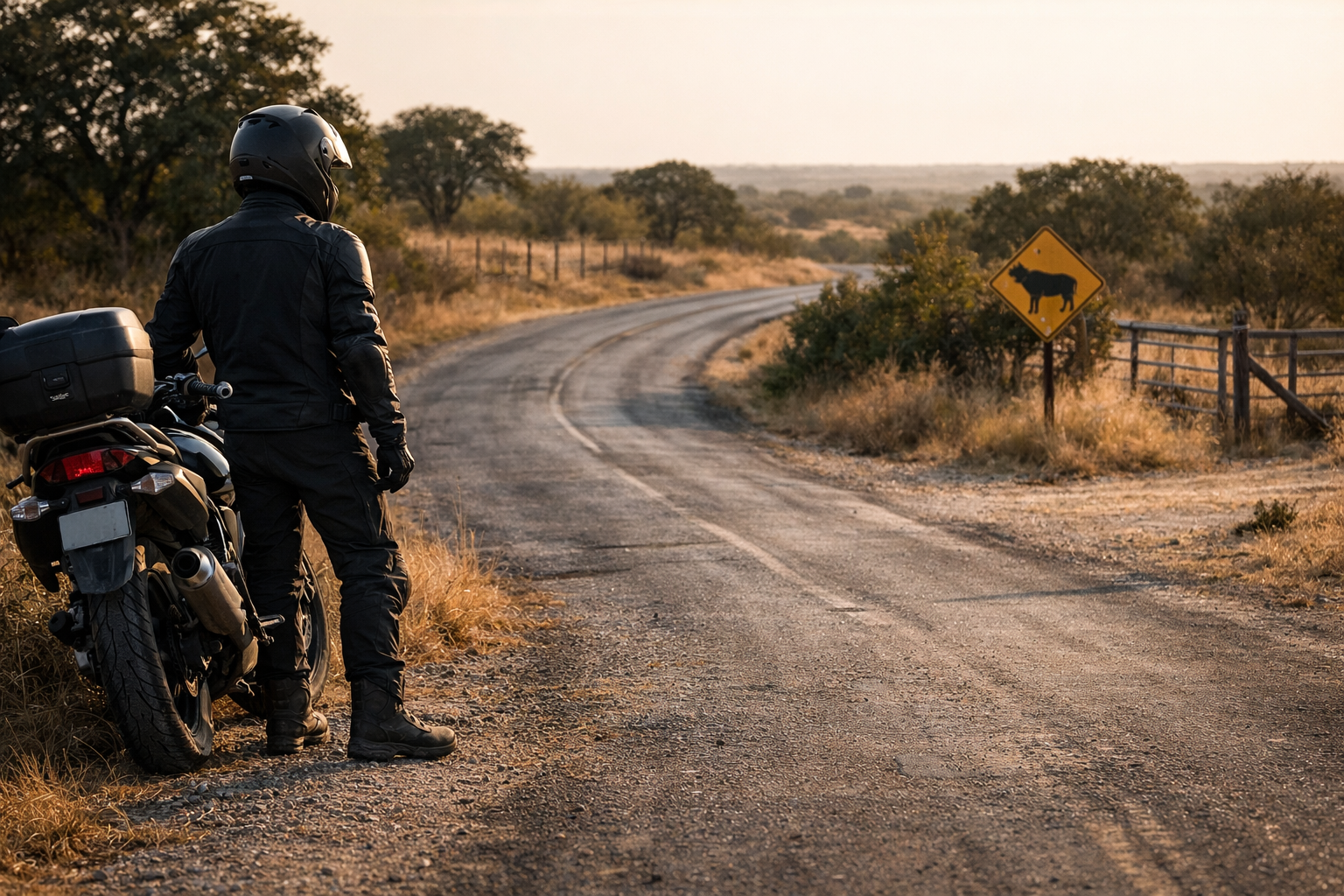
Motorcyclists in Texas face a unique set of dangers as they ride across the rural regions. When a crash occurs in these remote areas, the injured rider faces numerous challenges. This is mainly because the rural environment works against riders in diverse ways. However, you can secure justice through pursuing a legal action meant to bring those responsible to account.
If you or a loved one has suffered an injury in a rural motorcycle accident, the motorcycle accident attorneys at Lorenz & Lorenz, PLLC can help manage the road to recovery. As you read on, you’ll understand the hidden hazards that make these roads uniquely treacherous and what every rider should know to stay safe. Call us for a free consultation.
Key Takeaways for “The Hidden Dangers of Ranch Roads: Why Rural Texas Motorcyclists Face Higher Risks”
- Ranch roads present unique hazards, making rural Texas roads more dangerous for motorcyclists than urban streets.
- In such cases, liability is complex, sometimes resulting in shared or comparative liability.
- Prompt post-crash action is essential to protect your rights and strengthen a future claim.
- Proper legal representation ensures evidence is preserved, liability is thoroughly investigated, and your right to compensation is fully protected.
- Work with a lawyer early to help manage your motorcycle accident claim based on Texas laws and secure recovery for your losses and injuries.
What Are the Specific Dangers on Ranch Roads?
Ranch roads in Texas hide numerous hazards that make motorcycle riding riskier. Unlike urban streets, these roads were not designed with high-speed motorcycles or heavy traffic in mind, and several factors combine to increase the likelihood and severity of crashes. Here are the key hazards that rural riders face:
Narrow and Winding Roads
Many ranch roads are narrow, barely wide enough for two vehicles to pass safely. This limited width leaves little room for maneuvering, which can be especially hazardous for motorcycles, as they require more lateral space than cars. Sharp curves, blind corners, and unexpected hills make it easy to misjudge a turn or collide with roadside features or an oncoming vehicle. Riders often find themselves needing to react instantly, and even a small error can result in serious crashes or loss of control.
Unpredictable and Degraded Road Surfaces
The pavement itself is often the most significant hazard. Ranch roads frequently have patches of gravel, especially at intersections, driveways, and on curves. This aggregate can be spilled from trucks or washed onto the pavement from unpaved side roads. Even a thin layer acts like ball bearings and may instantly destroy traction during braking or cornering.
Maintenance on these low-traffic roads is not always on time. Potholes can be deep and jagged, capable of bending a rim or causing a loss of control. The edge of the pavement often crumbles away, creating a treacherous lip between asphalt and loose dirt or gravel. If you encounter hazardous conditions like these, you can report them directly to TxDOT via their roadway issue reporting system.
Limited Sightlines and Unmarked Hazards
The very geography that provides scenery also obscures dangers. Winding roads with dense foliage, rock outcrops, or steep hills can hide oncoming traffic, stopped vehicles, or road hazards just around the bend or over the next rise.
Also, there are dusty, overgrown ranch driveways that can be nearly invisible until a vehicle suddenly pulls out. Even stop signs may be obscured by vegetation or missing altogether.
In many ranch roads, there are often no streetlights, making night riding exceptionally hazardous. It means that at night, it may be challenging to see warning signs for sharp curves, dips, or cattle crossings.
Lack of Emergency Services and Delayed Response
Rural locations often mean longer emergency response times. When an accident occurs, paramedics, police, and fire services may take significantly longer to arrive compared to urban areas. This delay can increase the severity of injuries and complicate immediate medical care. For families and legal claims, the remote location can also make evidence collection more challenging, emphasizing the importance of timely documentation and legal assistance.
Shared Roadways with Agricultural and Animal Traffic
Ranch roads are not exclusively for motor vehicles. There is an ever-present risk of cattle, horses, deer, or wild hogs crossing or simply standing on the roadway. Collisions with large animals are often catastrophic for motorcyclists, with reports of over 1 to 2 million US wildlife crashes annually, many in rural zones.
Also, encountering a wide, slow-moving tractor, combine, or hay baler on a narrow road forces a rider to make quick decisions. This equipment may make sudden turns into fields without clear signaling and can drop debris, such as mud, rocks, or plant matter, onto the road.
It’s common to find mud, dirt, or manure dragged onto the pavement from field entrances, which becomes slick when wet. Fallen tree branches or rocks may also be present, especially after storms or logging activity.
Liability in Rural Motorcycle Accidents
Determining liability in rural motorcycle accidents can be particularly complex because of the unique hazards and multiple potential parties involved. Unlike city crashes, where accidents are often clearly linked to another driver’s negligence, rural roads introduce additional factors such as road conditions, property boundaries, and agricultural operations. Understanding who may be responsible is critical for pursuing a personal injury claim. Here are the primary considerations:
Negligent Drivers
The most obvious source of liability is another motorist. Drivers may be at fault for speeding, distracted driving, impaired operation, or failing to yield, even on remote ranch roads. Because traffic is often lighter, some drivers assume they can act recklessly without consequences, which can result in high-speed collisions with motorcycles. Proving negligence requires evidence such as witness statements, photographs, or vehicle data from onboard computers.
Government Entities and Road Maintenance
Rural roads are maintained mainly by county or state agencies. When poor road conditions contribute to a motorcycle crash, the government entity tasked with maintaining the road may be held liable, as emphasized in TxDOT’s ongoing Share the Road initiative. However, claims against governmental bodies are subject to unique notice requirements and timelines, making it essential to consult with a lawyer.
Property Owners
Accidents may involve private property just close to ranch roads. For example, if a rider crashes due to an overgrown tree obstructing the roadway, livestock wandering onto the road, or debris from a neighboring property, the landowner can bear some responsibility. Texas premises liability laws demand that premises owners maintain reasonably safe conditions, and failure to do so may form the basis of a claim.
Vehicle Manufacturers and Defective Equipment
Motorcycle or vehicle malfunctions can also play a role in rural crashes. Defective brakes, tires, suspension systems, or faulty lighting may contribute to loss of control or visibility issues. Product liability claims against manufacturers can be pursued if evidence indicates that a mechanical failure caused or worsened the accident.
Shared Liability
Following a rural motorcycle crash, it is not uncommon to find different parties sharing fault. More often, the accident results from a chain of failures or a combination of negligent actions by multiple actors, a concept known as shared or comparative liability.
For example, a county road department could have failed to repair a large, known pothole, a rancher allowed overgrown brush to obscure the warning sign, or the rider may have been traveling slightly over the posted speed limit for conditions.
In any accident investigation, insurers and defense attorneys will aggressively look for any action by the motorcyclist that can be framed as contributory negligence. However, the presence of a third party or one’s own negligence does not negate the claim, as long as you are not 51 percent or more at fault. An attorney will work to counter the shared responsibility and prove the primary cause was a hazardous condition outside the rider’s reasonable control.
Steps to Take After a Rural Motorcycle Crash in Texas
The moments following a rural motorcycle crash are vital to the success of your claim. Your actions can impact both your physical recovery and the strength of any future legal claim. Here are the steps involved in managing your motorcycle accident claim:
Seek Safety and Assess for Injuries
If you are able, carefully move yourself and your motorcycle to the side of the road, out of the travel lane, to avoid being struck again. Do not remove your helmet or attempt to stand if you suspect a head, neck, or back injury. Check yourself and any passengers for injuries. The adrenaline rush can mask pain, so you should never assume you are fine until you get an evaluation by a doctor.
Document Everything Extensively
If you are physically able, collect evidence before anything is moved or changes. Take clear photos or videos of the site, including:
- Road conditions such as gravel, potholes, and sharp curves.
- Skid marks or tire tracks.
- Vehicle positions and damage.
- Any debris, animals, or obstructions involved.
- Traffic signs, guardrails, and visibility conditions.
- Visible injuries such as cuts, bruises, and road rash.
- Damaged safety gear, including helmet, jacket, etc.
- Get names and contact information from any other motorists, passengers, or nearby residents.
Accurate documentation is crucial for establishing liability, particularly in rural areas where evidence can quickly disappear or be altered.
Report the Accident
Even if the crash did seem quite severe, a police report is essential. In rural areas, explicitly state your location using mile markers, ranch names, or the nearest crossroads. Report any suspected injuries. The responding officer will establish an official record of the scene, which is the official document for initiating an insurance or legal claim.
Preserve Evidence
Do not discard anything related to the accident. Keep any damaged gear, clothing, and personal recordings, such as helmet cameras and phone videos. If possible, request that the trucking company, vehicle owner, or government agency preserve evidence such as maintenance records or road condition reports. Your motorcycle accident attorney can assist in sending formal preservation notices.
Seek Immediate and Follow-Up Medical Care
Accept medical transport if offered by EMS. A hospital evaluation is key to diagnosing internal injuries. For less severe crashes, go to an urgent care or your doctor immediately after leaving the scene. Follow all treatment plans and keep detailed records. It creates the medical documentation necessary to link your injuries directly to the crash.
Consult a Motorcycle Accident Attorney Promptly
Rural motorcycle crashes often involve complex liability issues, multiple parties, or government entities. A lawyer at Lorenz & Lorenz, PLLC will do the following on your behalf:
- Secure and analyze the police report
- Launch an immediate investigation to preserve evidence
- Communicate with all insurers on your behalf
- Identify all potentially liable parties
- Manage Texas’s personal injury laws to protect your right to compensation
The isolation and unique hazards of rural roads make post-crash actions even more critical. A lawyer experienced in rural motorcycle accidents will protect your rights and help maximize compensation for the resulting losses and suffering.
Secure Legal Guidance Through the Process
Ranch roads present unique hazards that can make accidents more severe than ordinary road collisions. Because of these distinctive risks, establishing liability and proving negligence often requires legal experience and knowledge. A motorcycle accident attorney at Lorenz & Lorenz, PLLC can help handle these challenges and stand up for your rights. Call to book a free, confidential case evaluation.
Frequently Asked Questions About Rural Motorcycle Accidents and Higher Risks
If I was riding off-road or on a private ranch road when I crashed, do I still have a claim?
Yes, but the legal framework can be different. On private property, your claim would fall under premises liability law rather than standard traffic law. The landowner’s duty to you depends on your legal status, whether invitee, licensee, or trespasser. The key is establishing the landowner’s knowledge of a hidden hazard that caused the crash. These cases highly depend on establishing solid facts and require immediate investigation.
Can I be held liable if I swerved to avoid an animal and crashed?
In most cases, no, you cannot be held legally liable to another party for a single-vehicle crash caused by an emergency avoidance maneuver. However, the central issue for your claim will be proving the animal’s presence and establishing who was negligent in allowing it to be on the road. Your ability to recover for your injuries hinges on successfully holding the animal’s owner liable for creating the hazard that forced your evasive action.
How does the “recreational use statute” in Texas affect my claim?
Texas’s recreational use statute is designed to encourage landowners to allow public access for recreation by granting them heightened liability protection. If a county road is also used as a scenic route and the accident was caused by a “condition of the land”, the government entity may assert this immunity. Your attorney will find out whether the hazard was a natural condition or an artificial one resulting from negligent maintenance to advise you on your options.