A trucking company has a non-delegable legal duty under federal law to inspect, repair, and maintain every single vehicle in its fleet. This is a fundamental cost of doing business on public roads, governed by a dense framework of Federal Motor Carrier Safety Regulations (FMCSA).
This responsibility involves a massive, complicated web of federal compliance that includes daily inspection logs, electronic data tracking, driver medical vetting, and rigid maintenance schedules.
Despite these clear laws, the reality is that maintenance is expensive, and taking a truck off the road for repairs means lost profits. This financial pressure leads companies to delay necessary work or ignore what they deem "minor" issues. Unfortunately, these minor issues frequently become major catastrophes on the highway.
If you were injured because a commercial truck failed, the law provides a clear path to hold that company accountable. The regulations outlined by the government serve as the scorecard we use to prove they failed in their duty to keep you safe.If you have a question about a recent accident involving a commercial truck, call our truck accident lawyers at (512) 477-7333.
Key Takeaways for Trucking Company Safety Responsibilities
- Federal law establishes a non-delegable duty for vehicle safety. A trucking company is always responsible for the inspection, repair, and maintenance of its fleet, a cost of doing business on public roads.
- Documentation creates a clear record of compliance or neglect. Required paperwork, such as daily driver inspection reports (DVIRs) and maintenance logs, provides direct evidence of whether a company knew about and fixed a safety defect before a crash.
- A company is also responsible for the driver's fitness. This legal duty includes verifying a driver's medical certification, sobriety history via the federal Drug & Alcohol Clearinghouse, and proper licensing.
Who Sets the Safety Rules? Understanding the Framework
An 80,000-pound truck traveling at highway speeds is an incredibly dangerous machine if left unregulated. Without strict oversight, safety standards would vary wildly from one company to the next, creating unpredictable and hazardous conditions for everyone on Texas highways. This is why federal standardization is necessary.
The primary authority is the Federal Motor Carrier Safety Administration (FMCSA). For any trucking company involved in interstate commerce, the FMCSA's rules are law. These rules are compiled in a massive rulebook called Title 49 of the Code of Federal Regulations (CFR). Put simply, this is the book every fleet safety manager must know inside and out.
While federal rules establish the baseline, Texas laws add further layers of responsibility, particularly concerning local traffic laws and environmental standards. Furthermore, the regulatory landscape is constantly evolving. In 2025, regulations saw a significant overhaul, particularly regarding the Safety Measurement System (SMS), which is used to rate a carrier's safety performance. This means the standard for what is considered safe is higher today than it was just a few years ago.
The Physical Machine: Mechanical Maintenance Obligations
The core principle is simple: if a commercial truck is on a public road, every part of it must work perfectly to prevent mechanical failure. A trucking company's responsibility to keep their trucks safe begins with the physical nuts and bolts of the vehicle itself. They are not permitted to defer maintenance or hope a worn part lasts one more trip.
Brakes and Stopping Systems
Every commercial truck must have a fully functional braking system. Roadside inspections in 2025 have aggressively targeted faulty brakes, as they remain a leading cause of catastrophic truck crashes. A driver telling an officer that the brakes felt soft could be an admission that the company was negligent in its maintenance duties.
Tires and Wheels
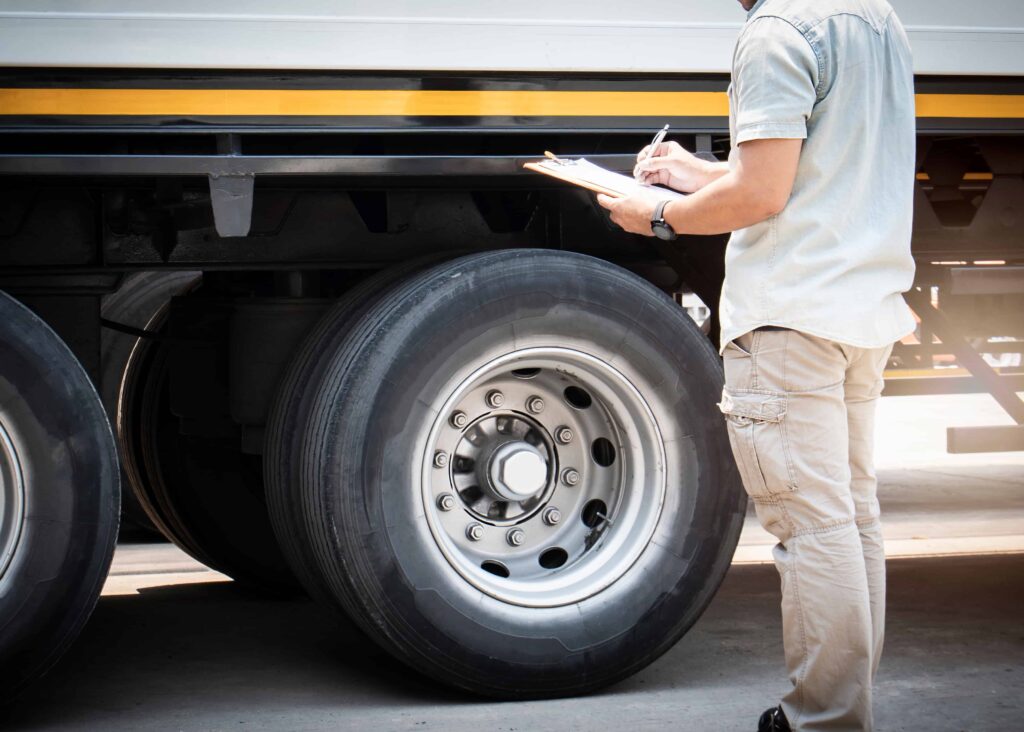
A tire blowout on a passenger car is dangerous; on a 40-ton truck, it is frequently fatal for anyone nearby. Trucking companies have a duty to inspect and replace tires before they fail. A blowout is rarely a freak accident. It is typically the predictable result of a company ignoring worn tread, improper inflation, or other clear signs of wear that should have been caught during a daily inspection.
Lights and Visibility
At night or in poor weather, a truck that isn't properly lit is nearly invisible until it's too late. Companies are obligated to ensure that all headlights, taillights, brake lights, and reflective conspicuity tape are functional and clean. If a truck isn't visible, the company has failed a basic maintenance duty.
Safety Tech Mandates (New for 2025)
The standards for truck safety technology were raised in 2025, incorporating systems designed to prevent accidents before they happen.
- Automatic Emergency Braking (AEB): A final rule has been proposed to mandate AEB systems on new heavy-duty trucks. These systems use sensors to detect a potential collision and automatically apply the brakes if the driver doesn’t react in time.
- Electronic Stability Control (ESC): To prevent rollovers and loss-of-control accidents, most new heavy trucks are now required to be equipped with ESC systems.
If the truck that hit you was a newer model and lacked these mandated systems, or if they were not properly maintained, that absence becomes a key part of our investigation.
The Paper Trail: Inspection and Documentation Duties
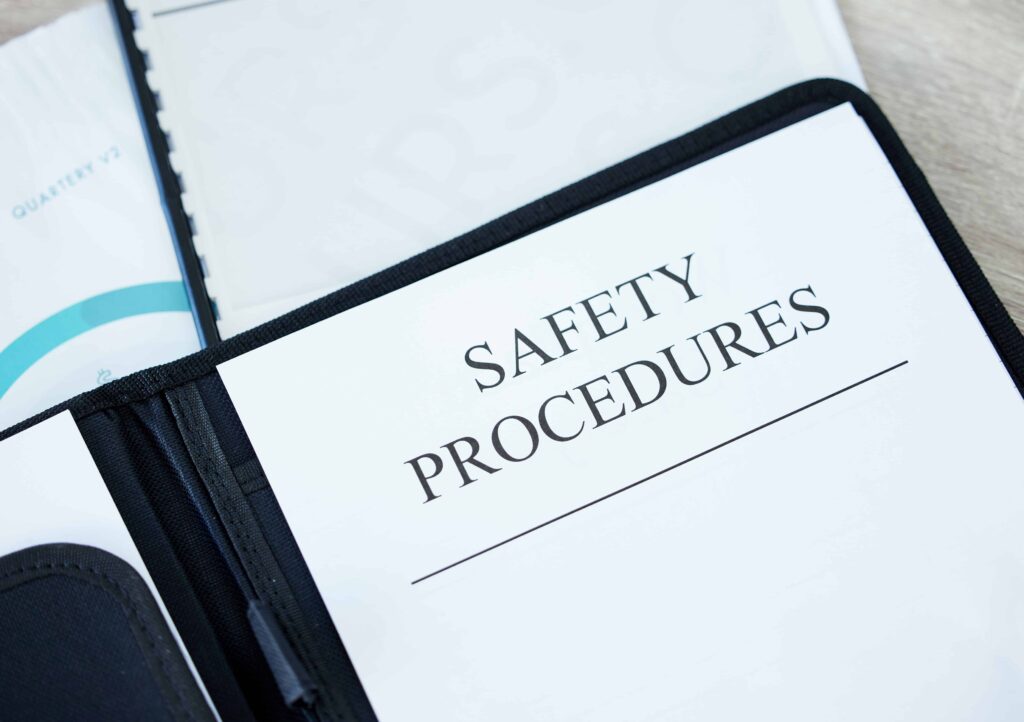
Federal regulations require a meticulous paper trail for every truck on the road. This documentation is a real-time record of the vehicle's condition and the company's commitment to safety.
Pre-Trip and Post-Trip Inspections
Before starting a shift and at the end of each day, every driver must conduct a thorough inspection and complete a Driver Vehicle Inspection Report (DVIR). This report covers essential components like brakes, lights, tires, and steering. The driver must sign off on the report, and if any defects are noted, the trucking company must certify that repairs were made before the truck is permitted to be driven again.
The Knowledge Standard
Here is where documentation becomes powerful. If a driver flags a defect on a DVIR (for example, a slow air leak in the brake system), the company is now legally considered to have knowledge of that problem. If they dispatch that same truck without making and certifying the repair, they are consciously choosing to risk public safety for profit.
Maintenance Logs
Beyond daily inspections, companies must keep detailed maintenance records for each vehicle. These logs must be kept for specific periods, typically one year while the vehicle is in service and for six months after it leaves the carrier's control. These records provide a complete history of all repairs and scheduled service.
2025 Enforcement Changes
Regulators are cracking down on falsified reports. The FMCSA has shifted to more intense digital scrutiny, looking at timestamps on electronic logs to ensure drivers aren't just pencil-whipping their inspections at the end of the day. A growing number of violations are being issued for incomplete or missing maintenance documentation, signaling that regulators view the paper trail as just as important as the physical repairs.
The Human Element: Responsibility for Driver Eligibility
A perfectly maintained truck is still a danger if the person behind the wheel is unfit to drive. A trucking company's responsibility extends to ensuring every driver they put on the road is medically certified, properly licensed, and not impaired by drugs or alcohol.
Medical Certifications
As of June 2025, the rules for medical certifications have been tightened. Medical Examiners must now upload results from a driver's physical exam directly to the national registry, and commercial driver's license (CDL) holders have only 15 days to provide updated certificates to their state licensing agency. The company must track these expiration dates vigilantly. A driver with a known heart condition, uncontrolled diabetes, or epilepsy who has not met the new clearance protocols should not be operating an 80,000-pound vehicle.
Drug and Alcohol Clearinghouse
The FMCSA Drug and Alcohol Clearinghouse is a secure database that tracks violations for all CDL drivers nationwide. As of 2025, employers are required to run a detailed query before hiring a driver and at least one limited query every year for existing drivers. Fines for failing to do so exceed $5,000 per instance. If a driver involved in a crash had a history of drug or alcohol violations, and the company never checked the Clearinghouse, that company may be held liable for negligent entrustment.
English Proficiency
A 2025 executive order has led to renewed enforcement of the long-standing English proficiency requirement. Under federal regulation 49 CFR § 391.11(b)(2), drivers must be able to read and speak English well enough to understand traffic signs, respond to law enforcement, and complete inspection reports.
Apprenticeships
The Safe Driver Apprenticeship Program (SDAP) allows individuals under 21 to operate commercial trucks under strict supervision. If the driver who hit you was part of this program, we will investigate whether the trucking company complied with all requirements, such as having required onboard video monitoring and a qualified, experienced driver in the passenger seat.
Electronic Oversight: ELDs and Data Responsibility
For decades, drivers used paper logbooks to track their hours of service, making it easy to falsify records and drive longer than legally allowed. Today, that has been replaced by electronic oversight.
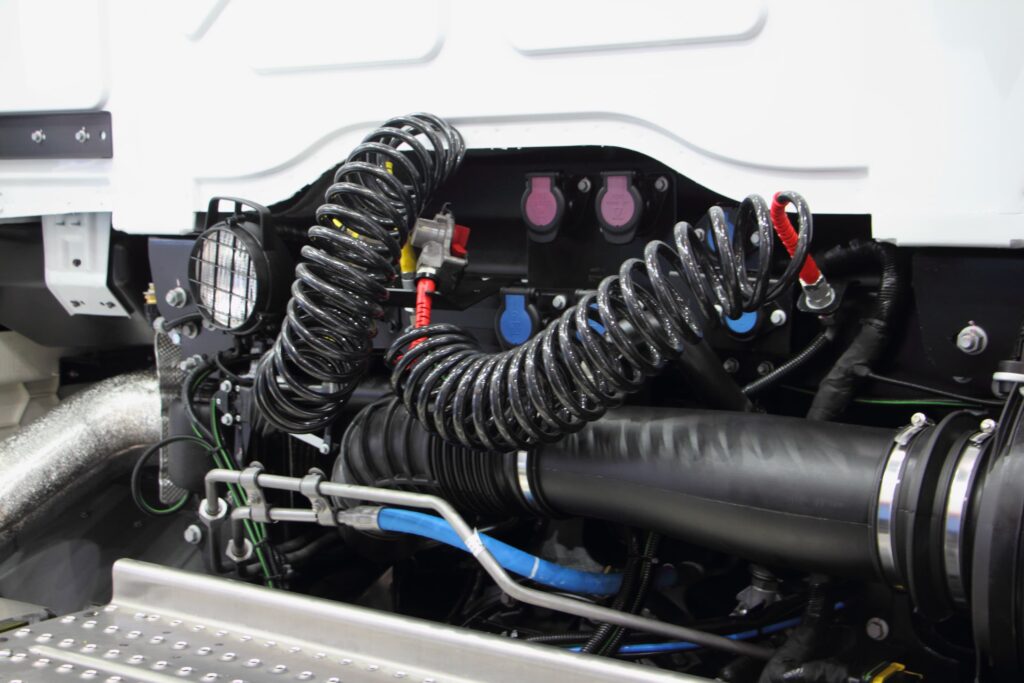
Electronic Logging Devices (ELDs) are connected directly to a truck's engine and automatically record driving time, location, and miles driven. Their purpose is to stop drivers from driving while fatigued by creating an unchangeable record of their hours. The company has a duty to ensure these devices are functioning correctly and is not permitted to pressure or encourage a driver to disconnect the device or ignore its warnings.
As of June 2025, older ELD models lost their certification and are no longer legal for use. Any carrier still using a revoked device is operating illegally. Furthermore, the company is responsible for the integrity of the data transmission, whether it's via Bluetooth or the cloud. Missing data is treated as missing compliance by regulators, and it is a red flag in a post-accident investigation.
How We Prove They Failed: The Investigation Process
When a trucking company fails in its duty to keep its fleet safe, the proof is typically found in the data and documents they are required to maintain. A skilled legal team knows exactly where to look and how to preserve that evidence before it disappears.
The CSA Score
The Compliance, Safety, and Accountability (CSA) program provides a safety rating for every motor carrier. Think of it like a credit score for safety. We examine a company's CSA score immediately to look for patterns of violations in areas like vehicle maintenance or unsafe driving.
The 2025 SMS Overhaul
The Safety Measurement System (SMS) that calculates CSA scores was significantly updated in 2025. The old categories were simplified, and importantly, drug and alcohol violations are now grouped under the Unsafe Driving category. This change helps us identify carriers with a pattern of letting dangerous drivers behind the wheel.
Spoliation Letters
A "spoliation letter" is a legal notice we send to the trucking company immediately after a crash. It is a formal demand that they preserve all relevant evidence—the truck itself, the black box data, maintenance logs, driver qualification files, and post-crash drug test results. Once this letter is received, they are legally forbidden from destroying this evidence.
Black Box Data
Modern trucks are equipped with Electronic Control Units (ECUs), also called black boxes. These devices record key data about the truck's operation in the seconds before, during, and after a collision, including speed, braking, acceleration, and steering inputs. We work with forensic experts to download and analyze this data to reconstruct the moments leading up to the crash.
Negligent Entrustment
If our investigation reveals that the company knew, or should have known, that a driver was unqualified or a truck was unsafe, we work to hold the company liable for "negligent entrustment." This legal concept means they are responsible for entrusting a dangerous machine to someone who shouldn't have been operating it.
FAQ for Trucking Safety & Liability
Can a company be liable if the driver owns the truck?
Yes. If the driver is operating under the company's DOT authority (their federal operating number), the company typically retains responsibility for ensuring both the driver and the vehicle meet all federal safety standards.
What if the company claims the crash was “non-preventable”?
A company may petition the FMCSA to have a crash classified as non-preventable, but they must provide compelling evidence. In a civil lawsuit, we are not bound by the FMCSA's determination. We conduct our own independent investigation to determine the true cause of the crash.
How does the new 2025 Motor Carrier Number change affect me?
This is primarily an administrative change. The FMCSA is phasing out the old MC numbers in favor of using a single USDOT number for tracking and identification. This simply alters how we search for a company's safety history; it does not change their legal responsibility to you.
Is the trucking company responsible if a part failed (like a tire blowout)?
In most cases, yes. A sudden manufacturing defect in a new tire is rare. More commonly, a tire blowout is the result of under-inflation, excessive wear, or damage—all things that should have been identified and corrected during a required pre-trip inspection.
How long do I have to file a claim in Texas?
Generally, the statute of limitations for personal injury claims in Texas is two years from the date of the accident. However, crucial evidence like inspection logs and black box data may be legally destroyed by the company in a much shorter timeframe.
You Shouldn’t Have to Suffer Because of Someone Else’s Negligence
When a trucking company puts its profits ahead of the safety of the families they share the road with, they should be held responsible for any damages that follow.
Our role at Lorenz & Lorenz, PLLC is to manage this legal process. We are the ones who pull the inspection logs, analyze the 2025 compliance changes, download the black box data, and find the proof that turns what they call an "accident" into what it really is: negligence.
You focus on your recovery. Let us focus on the investigation. Call Lorenz & Lorenz, PLLC today at (512) 477-7333 to discuss your case.