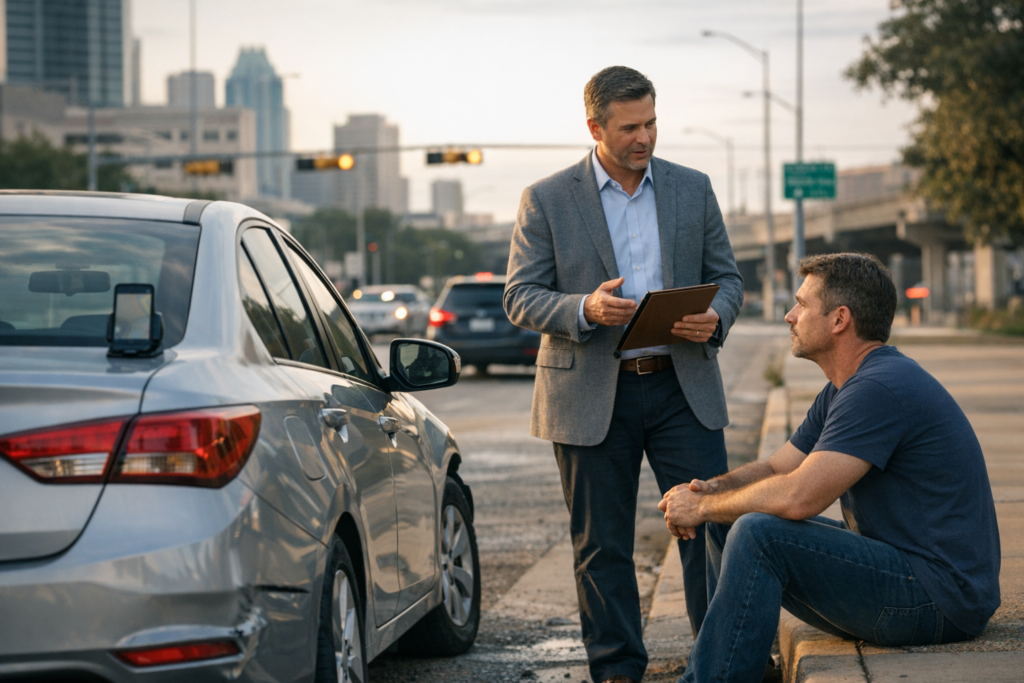
Rideshare services offer transport convenience at the touch of a button. However, the very nature of this industry creates a unique set of risks on the road. If you’re involved in a crash with a rideshare vehicle, you’ll quickly discover these accidents are unlike standard collisions. From determining which of three possible insurance policies applies to holding the corporations accountable, the path to justice is not without challenges.
While managing rideshare accident claims is intricate, having legal support can make the process seamless. A rideshare accident attorney at Lorenz & Lorenz, PLLC can support you through the legal maze to secure a recovery. If you’ve suffered an injury, call us to learn how to proceed after a rideshare accident.
Key Takeaways: Rideshare Accidents
- Rideshare accidents differ from standard collisions due to the hybrid nature of drivers’ work and the company’s business model, creating legal and insurance complexities.
- Liability may involve the driver, the rideshare company, and/or third parties such as government entities responsible for road conditions.
- Insurance coverage depends on whether the app was off, on, or in trip mode.
- Many parties can file the claim, including passengers injured in the rideshare vehicle, rideshare drivers injured while working, other motorists, pedestrians, cyclists, and bystanders affected by the accident.
- Offers from rideshare companies may cover only immediate costs and may not account for long-term damages; therefore, a legal review is essential before accepting.
- Contact an attorney quickly to handle liability issues, investigate insurance coverage, and preserve evidence.
Key Aspects of Rideshare Accidents
Rideshare accidents are not your typical fender-bender. They introduce specific legal and insurance complexities that stem from the hybrid nature of the driver’s work and the company’s business model. Here are the key aspects involved in such a collision:
Increased Risk
The sheer volume of rideshare vehicles significantly increases exposure on the road. Drivers, often navigating unfamiliar routes while interacting with a smartphone app, are statistically more likely to be involved in accidents. This gig economy model means more cars are being operated for commercial purposes, often during high-traffic and late-night hours, elevating the risk for passengers, other motorists, pedestrians, and cyclists alike.
Complicated Liability
Determining who is legally responsible is the first major hurdle involving rideshare accidents. Liability in a rideshare crash is not straightforward and may involve multiple parties, including:
- The Driver: If the driver acted negligently while operating the vehicle, they may bear personal liability.
- The Rideshare Company: The company may be held vicariously responsible under the legal principle of respondeat superior (where an employer is liable for employee actions) if the driver was acting within the course and scope of their work for the platform at the time of the crash. Companies can also face direct liability for their own negligence, such as improper driver screening or faulty app design.
- A Third Party: Another negligent driver, a vehicle manufacturer in a defect case, or a government entity for hazardous road conditions can share or bear full liability.
Insurance Coverage
Insurance coverage is entirely dependent on the driver’s app status at the exact moment of the crash. These include the following:
- Period 1: App Off. The driver is not working at this time. Therefore, only their personal auto insurance applies, assuming it covers rideshare activity.
- Period 2: App On, Waiting for a Ride. The driver is logged in but has not accepted a trip. Uber and Lyft provide only contingent liability coverage with low limits (often $50,000 per injury and $100,000 per accident), which may only apply if the driver’s personal insurance denies the claim.
- Period 3: App On, Trip Accepted or In Progress. From accepting a ride until the passenger exits, the highest level of commercial liability coverage applies, which is $1 million or above. This layer may also include uninsured/underinsured motorist (UM/UIM) coverage.
Identifying and securing the correct active policy is a key step that requires immediate investigation. A rideshare accident attorney can explore and coordinate these issues so that you are fully protected.
Common Causes of Rideshare Accidents
Uncovering the specific reasons behind rideshare collisions is key to building a strong liability case. While these crashes can result from any driving error, the unique pressures and structure of app-based driving create a pronounced risk for several negligent behaviors. A rideshare accident lawyer will help prove these factors to secure accountability from the negligent parties. Common causes include the following:
Distracted Driving
The design of the rideshare model requires drivers to constantly interact with their smartphones, which creates a significant distraction risk. Drivers must visually and manually engage with the app to accept trips, follow turn-by-turn navigation, and communicate with passengers. This divided attention drastically increases the likelihood of a driver failing to observe traffic signals, pedestrians in crosswalks, or slowing traffic ahead. It constitutes clear negligence, as drivers breach the duty to drive with full attention each time they prioritize the app over road safety.
Impairment
While rideshare platforms have strict prohibitions and background checks regarding impaired driving, these measures are not foolproof. A driver may succumb to personal substance use before or during a shift, or a previously undetected DUI may surface in their record. Impaired rideshare drivers exhibit slowed reflexes, poor judgment, and compromised motor skills, making them unable to operate a vehicle safely.
For an injured victim, driving while impaired represents an egregious form of negligence. Evidence of impairment can also support claims against the company for negligent entrustment if it failed to monitor the driver adequately.
Speeding and Aggressive Driving
The financial incentive structure of ridesharing, where earnings are tied to the number of trips completed, can create implicit pressure to hurry. Drivers may consciously or subconsciously speed between fares, treat yellow lights as accelerators rather than cautions, and make aggressive lane changes to shave minutes off a trip. This pattern of aggressive driving directly violates traffic laws and the duty to operate a vehicle with reasonable care for everyone on the road. When this hurry causes a collision, the driver’s negligence is to blame for the resulting losses.
Driver Fatigue
Unlike traditional employment with set shifts, rideshare drivers often work extremely long and irregular hours to maximize income. It mostly affects those driving during late-night or early-morning hours when demand and surge pricing are high. This schedule disrupts circadian rhythms and leads to chronic sleep deprivation, which severely impairs cognitive function, slows reaction times, and can cause microsleeps at the wheel.
A fatigued driver may fail to brake for stopped traffic or drift out of their lane. This condition is a well-recognized form of impairment, and driving while knowingly exhausted is a breach of the driver’s duty of care.
Improper Driver Screening and Inadequate Training
Rideshare companies have a duty to the public to properly vet their vehicle operators and verify that they understand basic safety protocols. Negligence in this duty can include failing to run a comprehensive background check, ignoring red flags in a driving record, or not verifying the validity of a driver’s license and insurance.
Furthermore, unlike taxi or commercial trucking companies, rideshare platforms provide minimal to no formal defensive driving or passenger safety training. This corporate failure to properly screen and prepare drivers can be a direct cause of accidents, creating liability for the company itself under theories of negligent hiring, training, or supervision.
Who Can File a Rideshare Accident Claim?
The force of a rideshare accident creates several potential victims with a distinct legal pathway to compensation. Liability is not limited to the immediate occupants of the rideshare vehicle but also extends to anyone whose safety was breached by the negligent operation of that commercial vehicle. A rideshare accident lawyer at Lorenz & Lorenz, PLLC can help identify your position and explain your rights and strategies that will apply to your case. Here are most of the potentially liable parties:
Passengers Injured While in the Rideshare Vehicle
As a paying passenger, you are owed the highest duty of care by the rideshare driver and the company. You entered the vehicle with an explicit expectation of safety under a contract of carriage. An injury during a trip establishes a clear claim against the rideshare company’s highest level of commercial insurance coverage. Your claim will focus on the driver’s negligence and may also involve the company’s own liability for failures in screening or safety protocols that contributed to the crash.
Rideshare Drivers Injured While Working
If you are a rideshare driver injured by another motorist while you are logged into the app, you occupy a dual role. You are a contractor operating in an employee-like capacity, but your primary claim for injuries will likely be against the at-fault third-party driver.
However, managing insurance becomes challenging. It is because you must determine if the at-fault driver’s insurance is sufficient, if your personal policy has rideshare endorsements, or if Uber/Lyft’s contingent or commercial policies apply based on your app status. Furthermore, if a road defect or vehicle malfunction caused the accident, additional liable parties may be investigated.
Other Motorists and Their Passengers
If a negligent rideshare driver struck your personal vehicle, you and your passengers have a direct claim for damages. Your claim will proceed against the rideshare driver’s applicable insurance layer, which must be meticulously identified based on their app status at the time of the crash.
These cases often involve challenging negotiations with the rideshare company’s insurance carriers. They may aggressively dispute fault or the driver’s period status to limit their financial exposure, which is why legal support is highly recommended.
Pedestrians, Cyclists, and Bystanders
Road users such as pedestrians and cyclists are often the most severely injured in collisions with vehicles. If you were struck by a rideshare car, you have a strong claim for damages. The success of your claim relies on proving the driver’s negligence and establishing that the driver was in a covered period so that the rideshare company’s substantial commercial policy is available to cover your damages.
Consult a Rideshare Accident Attorney Immediately
The challenges of rideshare accident claims typically require legal knowledge. Timely legal support can increase your chances of pursuing fair compensation while minimizing stress and potential legal pitfalls. An attorney from Lorenz & Lorenz, PLLC can immediately launch an investigation and preserve app data and other evidence to verify that you have a valid rideshare accident claim. For a free, confidential case evaluation, call us today.
Frequently Asked Questions About Rideshare Accidents
How long do I have to file a lawsuit after a rideshare accident?
You have a strict deadline, known as the statute of limitations. In Texas, a personal injury claim must be initiated within two years from the date of the accident. If you fail to initiate a formal lawsuit in court by this date, you will be barred from seeking recovery. It is advisable to consult an attorney well before this date approaches to complete all investigations and filings on time.
Can I sue Uber or Lyft directly after an accident?
You can hold the rideshare company liable in some circumstances, but your ability to sue depends on the driver’s employment status and the stage of the ride. For example, if the driver was on an active trip, the company’s commercial insurance may cover most damages, while incidents before accepting a ride may rely on the driver’s personal insurance. A lawyer can answer your questions regarding ridesharing and insurance and help determine the responsible parties.
Are injuries from minor collisions worth filing a claim?
Yes, regardless of the severity of the injuries, you should file a claim to secure compensation for damages. Even minor collisions may cause injuries such as whiplash, concussions, or soft tissue damage. Insurance companies may attempt to downplay these injuries to limit payouts, but they can carry significant weight in the future. Legal representation helps account for all current and potential future medical costs when seeking compensation.
The rideshare company offered me a quick settlement. Should I take it?
You should be highly cautious. Initial offers from rideshare companies or their insurers are almost always designed to settle your claim quickly and for far less than its true value. These offers usually cover only immediate, obvious medical bills and do not account for future treatment, ongoing pain and suffering, lost earning capacity, or other long-term damages. Once you sign a release, you give up your right to seek additional compensation should your injuries worsen later. Have your own attorney review any offer before making the move to accept it.