In the vast majority of rear-end collisions, the driver who hit the car in front is liable. Their liability insurance is responsible for paying your medical bills, property damage, and lost wages.
However, getting them to pay isn't always straightforward. Texas operates under an "at-fault" system, which means you must prove negligence before a check is cut. This is where the situation becomes complicated.
Issues arise when the other driver lacks sufficient coverage (a common issue in Texas), disputes fault, or when their insurance company argues your injuries pre-existed the crash.
The law provides specific avenues to capture compensation, even if the other driver is uninsured. At Lorenz & Lorenz, PLLC, we track down every available policy to ensure you do not have to pay for these costs out of pocket.If you have a question about a recent Austin crash and the bills are starting to arrive, call us at (512) 477-7333.
Key Takeaways for Rear-End Collisions
- The rear driver is usually at fault. Texas law presumes the driver who hits someone from behind is liable because they failed to maintain a safe distance.
- The at-fault driver's insurance is the primary source of payment. However, Texas' low minimum insurance requirements mean this is frequently not enough to cover all medical bills and property damage.
- Your own insurance may be needed to cover the gap. Uninsured/Underinsured Motorist (UM/UIM) coverage is designed to pay for your damages when the at-fault driver has little or no insurance.
The Basics: Who, Why, and How Fault Is Determined
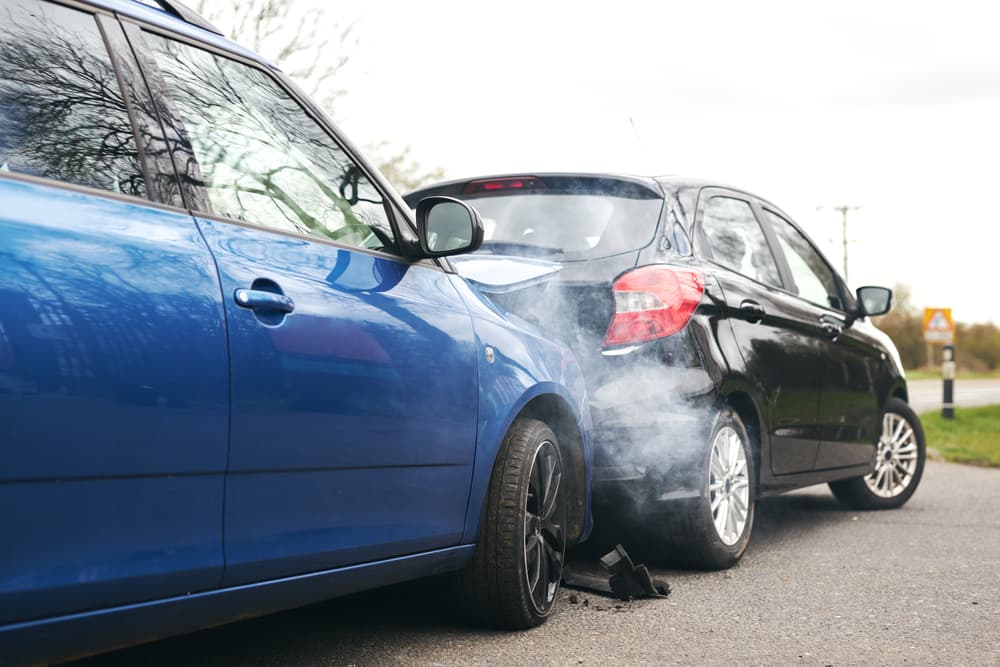
The fact that the rear driver is assumed to be at fault is a "rebuttable presumption," not an absolute law. This means that while the law presumes the rear driver is responsible, they have the opportunity to present evidence to argue otherwise.
The core of this presumption lies in a legal concept known as Duty of Care. Every driver in Texas has a legal duty to maintain an Assured Clear Distance Ahead (ACDA). This principle is codified in Texas Transportation Code § 545.062, which states a driver must maintain a safe distance to stop without colliding with the vehicle in front of them.
Physics and the law usually agree here. If another driver hit you from behind, they were almost certainly following too closely, speeding for the conditions, or distracted by something like their phone.
The Primary Source: The At-Fault Driver’s Liability Insurance
The at-fault driver doesn't typically pay you from their personal bank account; their insurance company is contracted to pay for the damages they cause, up to their policy limits.
This money is divided into two main buckets:
- Bodily Injury Liability: This portion pays for your medical care, recovery costs, lost income from being unable to work, and compensation for your pain and suffering.
- Property Damage Liability: This is more straightforward and pays to repair or replace your vehicle and any other property that was damaged.
This is where the process becomes tricky. Texas law only requires drivers to carry minimum coverage of $30,000 per person for injuries (up to $60,000 total per accident) and $25,000 for property damage. Given the high cost of medical care and vehicles today, these minimums are typically exhausted quickly.
Imagine your truck is worth $40,000 and the person who hit you only has the state minimum of $25,000 in property damage coverage. That leaves a $15,000 hole in the pavement. Who fills it? The answer isn't always simple, which is why a thorough investigation is necessary.
Our first step is to verify the other driver's policy limits immediately. If their coverage cap is too low to make you whole, we move on to identify other sources of recovery.
When You Might Pay: Comparative Negligence in Texas
What happens when the other driver’s insurance company denies the claim or, even worse, argues that you caused the crash?
They might claim your brake lights were out, that you slammed on your brakes unexpectedly ("brake-checking"), or that you merged unsafely right before stopping. These are common defenses used to shift blame.
This distinction is important in Texas because of a rule called Proportionate Responsibility. This law, also known as modified comparative negligence, states that you are barred from recovering any money if you are found to be 51% or more at fault for the accident. If you are found to be partially at fault, your final compensation is reduced by your percentage of fault. The other driver's insurance company knows this, and their goal is to assign as much blame to you as possible.
What If They Don’t Have Insurance? (UM/UIM Coverage)
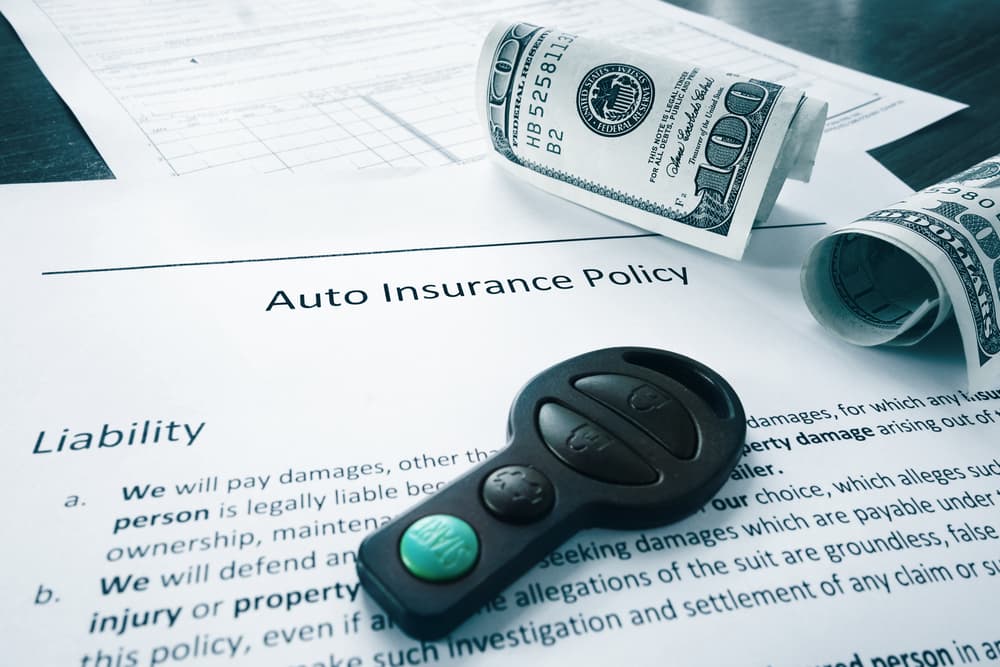
Recent data show that about one out of every seven drivers in Texas does not have the required insurance. Being hit by one of them feels like a complete dead end. You're hurt, your car is wrecked, and the person responsible has no means to pay for the damage they caused.
This is precisely why you have Uninsured/Underinsured Motorist (UM/UIM) Coverage. This is coverage on your own auto policy that steps in to act like the insurance the at-fault driver should have had.
Here’s how it works:
- Uninsured Motorist (UM): Pays for your damages if the at-fault driver has no insurance at all, or if you were the victim of a hit-and-run.
- Underinsured Motorist (UIM): Fills the gap when the at-fault driver has insurance, but their policy limits are too low to cover all your damages. If your surgery costs $100,000 and their policy maxes out at $30,000, your UIM coverage applies to the remaining $70,000.
A frequent concern is whether using your own UM/UIM coverage will cause your insurance rates to go up. While any claim might impact your rates, Texas law generally prohibits insurers from raising your premiums for an accident you did not cause.
Who Pays for the Car Repairs vs. The Medical Bills?
After a crash, you will be dealing with two separate but parallel claims: one for your vehicle and one for your injuries. They are handled differently and are paid from different sources.
Property Damage (The Car)
You have two primary options for getting your car fixed:
- File through the at-fault driver's insurance. This is a "third-party claim." The benefit is that you won't have to pay a deductible. The downside is the process is slower, as their insurance company will want to conduct its own investigation before accepting liability and issuing payment.
- File through your own collision coverage. This is a "first-party claim." This is almost always faster. You will have to pay your deductible upfront, but your insurance company will then pursue the at-fault driver’s insurer to get that money back for you—a process called subrogation.
Additionally, a repaired car is worth less than one that has never been wrecked. This loss in resale value is known as "diminished value." In Texas, you are legally entitled to claim diminished value from the at-fault party's insurance.
Medical Bills (The Body)
Medical payments are more complicated. Initially, bills may be paid from a few sources:
- Personal Injury Protection (PIP): Most Texas auto policies include PIP coverage unless you rejected it in writing. This is no-fault coverage that pays for your initial medical bills and a portion of your lost wages, up to the policy limit, regardless of who caused the crash. It provides "fast cash" to keep creditors at bay while your larger claim is pending.
- Health Insurance: You should use your health insurance for immediate treatment. However, be aware that your health insurer will have a right to be reimbursed from your final personal injury settlement. This is called subrogation, and negotiating this lien is a key part of what we do.
Why Insurance Companies Lowball Rear-End Claims
Insurance companies are for-profit businesses, not charities. They have a fiduciary duty to their shareholders, which means they must balance paying valid claims with protecting their bottom line.
For injuries like whiplash, which don't always show up on an X-ray, insurers sometimes rely on software that calculates "average" healing times. If their algorithm says a neck strain should resolve in six weeks, but you are still in pain six months later, they may refuse to pay for the additional treatment without compelling evidence.
They also know that as time passes, financial pressure mounts. Medical bills accumulate, and you might lose income. This creates a temptation to accept a quick, small settlement check just to get the car fixed, but doing so could mean you sign away your rights to any future medical coverage related to the accident.
Our role is to counter their approach. We provide the detailed medical records, expert opinions, and economic projections needed to override their software and force a human evaluation of your specific pain, suffering, and financial losses.
Frequently Asked Questions About Who Pays for Rear-End Collisions
Will my insurance rates go up if I claim UM/UIM for a rear-end crash?
Generally, no. Texas insurance codes are designed to prevent insurers from surcharging you for making a claim for an accident where you were not at fault. While any claim is a data point for an insurer, a not-at-fault UM/UIM claim should not be the reason for a rate hike.
What if I was rear-ended in a rental car?
The payment process is similar. The at-fault driver's insurance is the primary source of payment. If they are uninsured or underinsured, the coverage you purchased from the rental company, your own personal auto policy, or coverage from the credit card used to rent the car may apply as secondary sources.
The other driver hit me and fled (Hit and Run). Who pays?
A hit-and-run is treated as a collision with an uninsured motorist. Your own Uninsured Motorist (UM) coverage would apply here, both for your bodily injuries and, if you carry it, for the damage to your property.
How long do I have to file a claim?
In Texas, the statute of limitations for filing a personal injury lawsuit is generally two years from the date of the accident. However, do not wait to file a claim. Evidence disappears, memories fade, and waiting signals to the insurance company that your injuries were not serious.
What if I was pushed into the car in front of me?
This is a common scenario in multi-car pile-ups. In most cases, the car that started the chain reaction (the very last car) is held responsible for everyone's damages. However, if it is argued that you were following the car in front of you too closely, you might be assigned a portion of the liability for the damage to that vehicle.
Let’s Get the Justice You Deserve
The physical pain of a car crash is bad enough; the financial uncertainty shouldn't make it worse. The money to cover your losses is there—whether it's through the at-fault driver's policy, a commercial policy, or your own UM/UIM coverage. It is just a matter of knowing which levers to pull to release it.
You don't have to spend hours on hold with insurance adjusters who are trained to minimize your payout. We handle the paperwork, the phone calls, and the negotiations so you focus on what matters: healing.If you aren't sure who should be paying for your rear-end collision damages, let's look at the facts together. Call our car accident lawyers at Lorenz & Lorenz, PLLC today at (512) 477-7333 for a free consultation.