If you are struck by a vehicle, the incident usually brings many physical, emotional, and financial challenges. At this time, you want to know what the timeline is so you can prepare for these pressures. However, pedestrian accident claims don’t follow a one-size-fits-all timeline. On average, most cases resolve within a few months to a year, while more complex claims can take longer.
Successfully managing the claims process requires a thorough understanding of personal injury law and the resources to build a strong, unshakable case. The legal team at Lorenz & Lorenz, PLLC can guide you through the steps to the final settlement or trial verdict. If you are harmed in a pedestrian accident, you need to talk to a pedestrian accident attorney for clarity on your next steps. Call us to discuss your claim and your path forward.
Key Takeaways: How Long Do Pedestrian Accident Claims Take to Settle?
- Most pedestrian accident cases resolve within a few months to a year, but complex injuries, disputed liability, or multi-insurer claims can take much longer.
- Prompt medical treatment, evidence collection, and cooperation with your attorney can streamline the timeline without compromising settlement value.
- An attorney can manage the legal complexities, coordinate with insurers, handle deadlines, and develop a strategy that balances timely settlement with fair compensation.
- Mediation resolves disputes more quickly than litigation, narrowing the issues and often encouraging settlements before court intervention becomes necessary.
- Contact a lawyer early so they can manage factors efficiently and prevent unnecessary delays.
What Affects The Length Of A Pedestrian Accident Settlement
While every pedestrian accident claim is unique, so is the time it takes to resolve. The timeline is directly controlled by a set of specific factors that often interlock with each other. These elements help see why some cases are resolved within months, while others require a much longer process. Here are the factors that can shorten or lengthen the journey to your settlement:
The Severity of Injuries
This is arguably the most significant driver of your claim’s timeline. The nature and extent of your injuries dictate the pace of the entire process.
A claim cannot be properly valued and therefore cannot be settled until the full scope of your injuries is known. It means waiting until you reach Maximum Medical Improvement (MMI). For minor injuries, such as sprains or simple fractures, MMI may come within a few months. For catastrophic injuries, reaching MMI can take a year or more.
Rushing to settle before this point would mean guessing at future medical costs, lost earnings, and lifelong care needs, which almost always results in an inadequate settlement. Furthermore, severe injuries require extensive medical documentation and often necessitate hiring medical experts to testify about your future prognosis, adding additional months to the evidence-gathering phase.
Simply, more serious injuries require more treatment time, more documentation, and a longer period to assess. As the case remains open longer, it will inevitably extend the settlement timeline.
Liability Disputes
Liability means legal responsibility. In a clear-cut case where a driver ran a red light and struck you in a marked crosswalk, liability is straightforward. However, when a fault is contested, the timeline expands considerably.
For instance, the moment an insurance adjuster or defense attorney suggests you were even partially at fault, the claim shifts from a discussion of value to a battle over blame. Resolving this dispute requires a substantial investment of time and resources. Your legal team must conduct a more intensive investigation and analyze traffic laws.
Each of these steps takes weeks or months to complete. The insurance company will conduct its own parallel investigation. This discovery process, even pre-litigation, becomes a prolonged tug-of-war. Therefore, settlements are far quicker when liability is clear, but when it’s disputed, the process can easily double or triple in length as both sides build their arguments.
The Insurance Company’s Approach
Not all insurance companies or adjusters handle claims the same way. Their internal policies and the individual adjuster’s approach can significantly speed up or drag out your case. Some insurers may aim for efficient, fair resolutions on clear-liability cases. However, many operate on a “delay, deny, defend” model, especially when large sums are involved. Some of the tactics insurers use to prolong the process include:
- Taking weeks to acknowledge receipt of your demand package
- Requesting redundant or unnecessary documentation
- Making unreasonably low initial offers to test your patience
- Delaying responses between negotiation rounds
These tactics are designed to wear you down, hoping financial pressure will compel you to accept a lower settlement quickly. A pedestrian accident attorney from Lorenz & Lorenz, PLLC knows how to counter these tactics. If your lawyer senses bad-faith behavior, they may escalate claims to supervisors while preparing for litigation. Overall, this strategic back-and-forth inherently adds time to the negotiation phase.
Whether the Case Goes to Court
The vast majority of pedestrian accident claims settle outside of a courtroom. However, when a fair agreement cannot be reached, filing a lawsuit becomes necessary, which resets the timeline on a much longer track.
Litigation is a procedural marathon. Once your lawyer decides to initiate a lawsuit, the courts set the schedule. Key phases of litigation in a pedestrian accident case include:
- Discovery: This formal evidence-exchange phase includes depositions, written interrogatories, and requests for documents. It is meticulous and slow.
- Mediation/Settlement Conferences: Even during litigation, most cases settle through court-ordered mediation; however, scheduling this alone can take months.
- Trial Docket: If a case doesn’t settle, it waits for a trial date, which can be years away in some busy Texas courts.
While litigation is a powerful tool to force a serious settlement offer, it automatically extends the timeline to two or three years in many cases. The decision to litigate is key to balancing the need for fair compensation against the additional time and investment required.
State Laws and Statutes of Limitations
State-specific rules also play a role in how long a pedestrian accident claim can take. The deadlines for filing a lawsuit create pressure to move efficiently. In Texas, for example, claimants usually file a personal injury lawsuit within two years (Texas Civil Practice and Remedies Code § 16.003). If negotiations drag on and the deadline approaches, an attorney may file suit to preserve the claim.
Additionally, comparative fault laws also impact timelines. States that allow insurers to reduce compensation based on the pedestrian’s share of fault tend to see more pushback from insurance companies, which slows down the negotiation process. Moreover, state-specific insurance regulations dictate how quickly insurers must acknowledge and process claims, which can either accelerate or hinder progress.
These legal boundaries set the pace of the claims process and sometimes determine whether a case can stay in negotiation or must move to litigation. If the interplay of these factors feels overwhelming, a lawyer can analyze the unique details of your case and provide a realistic outlook for your claim.
How to Potentially Speed Up the Settlement Process
While patience is advisable in injury claims, unnecessary delays can be frustrating and financially stressful. The good news is that your actions can positively influence the timeline by creating an efficient and compelling claim. You can streamline the process and position your claim for the most efficient resolution possible without sacrificing its value. Here are key steps to consider:
Seek Medical Treatment Immediately and Follow Through
Seeking immediate medical care creates a clear, timestamped link between the accident and your injuries. It eliminates an insurer’s argument that your injuries were minor or from a different cause. Furthermore, diligently following your treatment plan and attending all appointments allows you to reach Maximum Medical Improvement (MMI) without delays caused by gaps in care.
A complete, continuous medical record is the fastest route for your attorney to assess the full value of your claim and begin building your demand package. Delays in treatment create gaps that insurers will exploit, leading to requests for more records and prolonged disputes about your recovery.
Gather and Preserve Strong Evidence Early
Evidence deteriorates, and memories fade as the days progress. Acting quickly preserves the building blocks of your claim. If possible, take photos of the scene, your injuries, vehicle damage, and road conditions. Get contact information for witnesses. Report the incident to the police to have an official report filed.
Early evidence collection gives your legal team a significant head start. It prevents the need for a time-consuming scramble later to locate witnesses or obtain security footage that may have been erased. A strong evidence base established early makes the investigation phase shorter and more conclusive, leading to a stronger, faster initial demand.
Work With a Pedestrian Accident Attorney
Partnering with an attorney is one of the most effective ways to achieve a timely and fair settlement. Attorneys understand the procedural roadblocks insurers use and how to maneuver them efficiently. A lawyer will handle all correspondence, evidence collection, and negotiations, preventing you from inadvertently causing delays.
Also, a lawyer can prepare a comprehensive demand package from the outset, which encourages faster and more effective negotiations. Most importantly, they manage the process strategically with the statute of limitations and court deadlines in mind so that they preserve the validity of your claim.
Cooperate With the Insurance Process
Cooperation is required, but it must be strategic and guided. Provide your attorney with all necessary information and documentation in a timely manner. Sign medical releases to enable them to obtain your records efficiently. Be available to discuss case details with your legal team.
However, cooperation does not mean giving a recorded statement to the at-fault driver’s insurer or accepting the first low offer. Let your attorney act as the point of contact to ensure all cooperation is legally sound. This managed cooperation keeps the process moving smoothly without surrendering leverage.
Consider Mediation Before Litigation
When negotiations reach a standstill, mediation can help break the gridlock without jumping straight into a lawsuit. Mediation brings both sides together under the guidance of a neutral third party who facilitates productive discussion.
Because it avoids the lengthy procedures of litigation, mediation can resolve disputes much faster, sometimes within a single day. Even when a complete agreement isn’t reached, mediation often narrows issues and accelerates settlement progress.
A Pedestrian Accident Lawyer Can Manage Your Claim
To balance the need for a faster settlement with the recovery of fair compensation, strategic management of your claim is needed. A lawyer can devise the right strategy to move your case forward efficiently without compromising the quality of your recovery. With an attorney handling the legal complexities, you’re free to focus on healing while knowing your claim is progressing efficiently. If you or a family member has suffered an injury in a pedestrian accident, Lorenz & Lorenz, PLLC stands ready to help. Call us today for a free, no-obligation consultation.
Frequently Asked Questions: Pedestrian Accident Claims Timeline
Does my own auto insurance apply if I’m injured as a pedestrian?
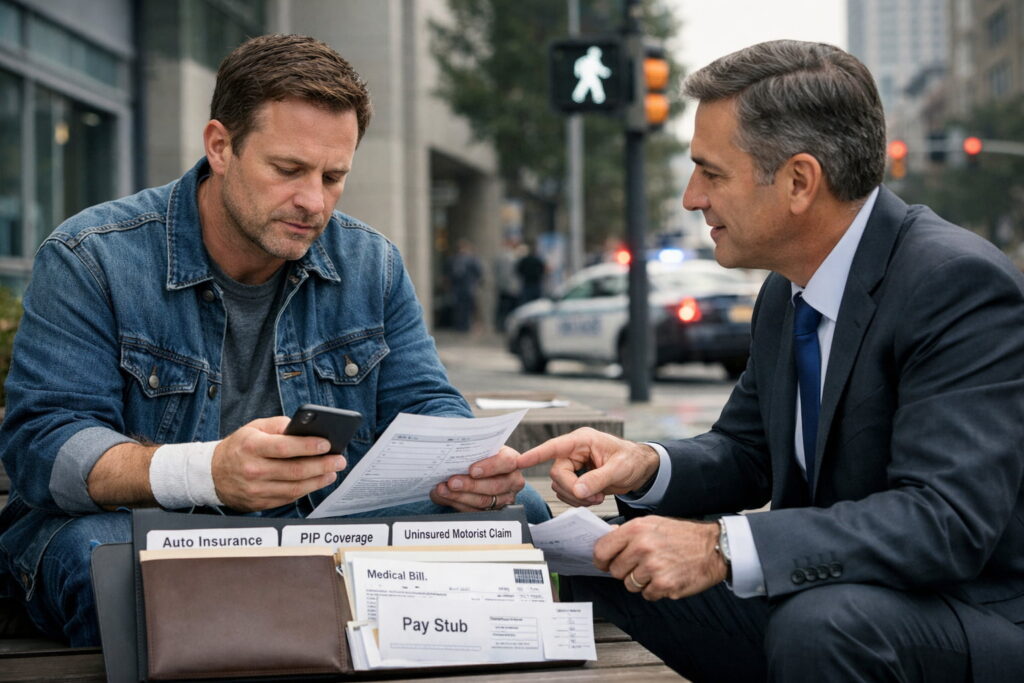
Your auto insurance, specifically PIP or uninsured/underinsured motorist coverage, can apply and often speeds up access to necessary funds. These benefits can cover immediate medical bills or lost income while the main claim is still unfolding. A lawyer can coordinate both claims efficiently to avoid delays, prevent double-billing issues, and make sure your benefits are used in the fastest and most strategic way.
Can I still pursue compensation if the driver flees the scene?
Yes, you can still pursue compensation in a hit-and-run case. However, the process may take longer because police investigations and evidence collection require additional time. When the driver is unknown, claims may shift to your uninsured motorist policy, which can also trigger additional review steps. A lawyer can speed things along by conducting an independent investigation, securing video footage quickly, and pushing your insurer to process the claim without unnecessary delays.
Can multiple insurance companies involved in an accident affect how long my claim takes?
Claims involving more than one insurance company usually take longer because each carrier needs to evaluate its responsibility and coordinate with the others. Coverage disputes can stall settlement talks. Fortunately, a pedestrian accident lawyer can manage communication with all parties, ensure deadlines are met, and negotiate on your behalf to streamline the process and avoid delays associated with multi-party coordination.